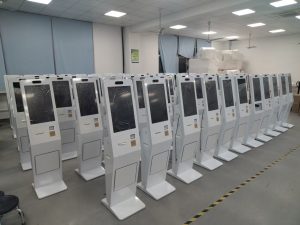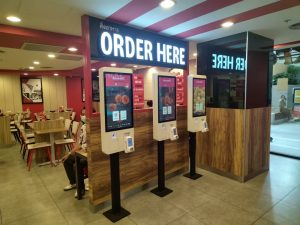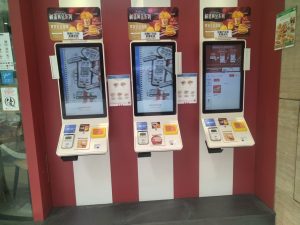
A connected ordering flow can reduce repeated data entry and give guests a more consistent path from menu browsing to payment.

The restaurant industry has entered an era of refined operations. Rising rent and labor costs, peak-hour queues and congestion, manual order errors, and difficulty converting members have long plagued small and medium restaurant operators. Solving traffic pressure the traditional way – by adding staff – only further squeezes profit margins. Against this industry backdrop, the self-ordering kiosk, with its integrated hardware-software design, brings ordering, marketing, membership management, payment and settlement, and kitchen coordination together on a single terminal, reshaping the store’s operational chain with an intelligent self-service model and helping restaurant businesses balance operating costs with the guest experience.
Hardware configuration is the foundational layer for stable operation. The self-ordering kiosk is equipped with a quad-core industrial-grade mainboard and a 2+16GB RAM/storage combination, ensuring smooth system performance in multi-task scenarios – lag and crashes are rare even under long hours of heavy load. The screen is a 21.5-inch 1080P full-HD multi-touch capacitive display with crisp, detailed visuals and responsive touch, easy for both elderly and young guests to use. The device has a built-in facial recognition module with full support for facial-registration member signup, login, and facial payment, bringing cutting-edge biometric technology into physical restaurants. It can be deployed without complex renovations and suits fast-food restaurants, tea shops, light-meal eateries, and many other offline formats.
The entire ordering process is broken into four stages – pre-order, item selection and ordering, payment and settlement, and order fulfillment – with the full chain connected to form a closed business loop. Before the guest starts ordering, the home screen can serve as a marketing display window: restaurant operators can upload posters or short videos themselves to promote new products and limited-time offers. The system also provides multiple member login options – beyond phone number and QR code, facial login and registration are a major highlight. Guests convert from walk-in guests to store members in just seconds, dramatically lowering the barrier to membership registration and laying the groundwork for accumulating an owned loyalty audience.
In the item selection stage, the device does more than simply display the menu – it offers intelligent product recommendations. Restaurant operators can customize recommendation logic in the back office, setting strategies around best sellers, new items, and combo meals to prioritize high-value products on the ordering interface. The page simultaneously displays the member’s account balance and available coupons, so guests can see all discounts at a glance and complete selection while browsing on their own – no server rushing them, ample time to think, less purchasing pressure, and indirectly higher average tickets. Unlike manual ordering, which is prone to communication misunderstandings, the machine’s standardized selection model eliminates information errors caused by miscommunication.
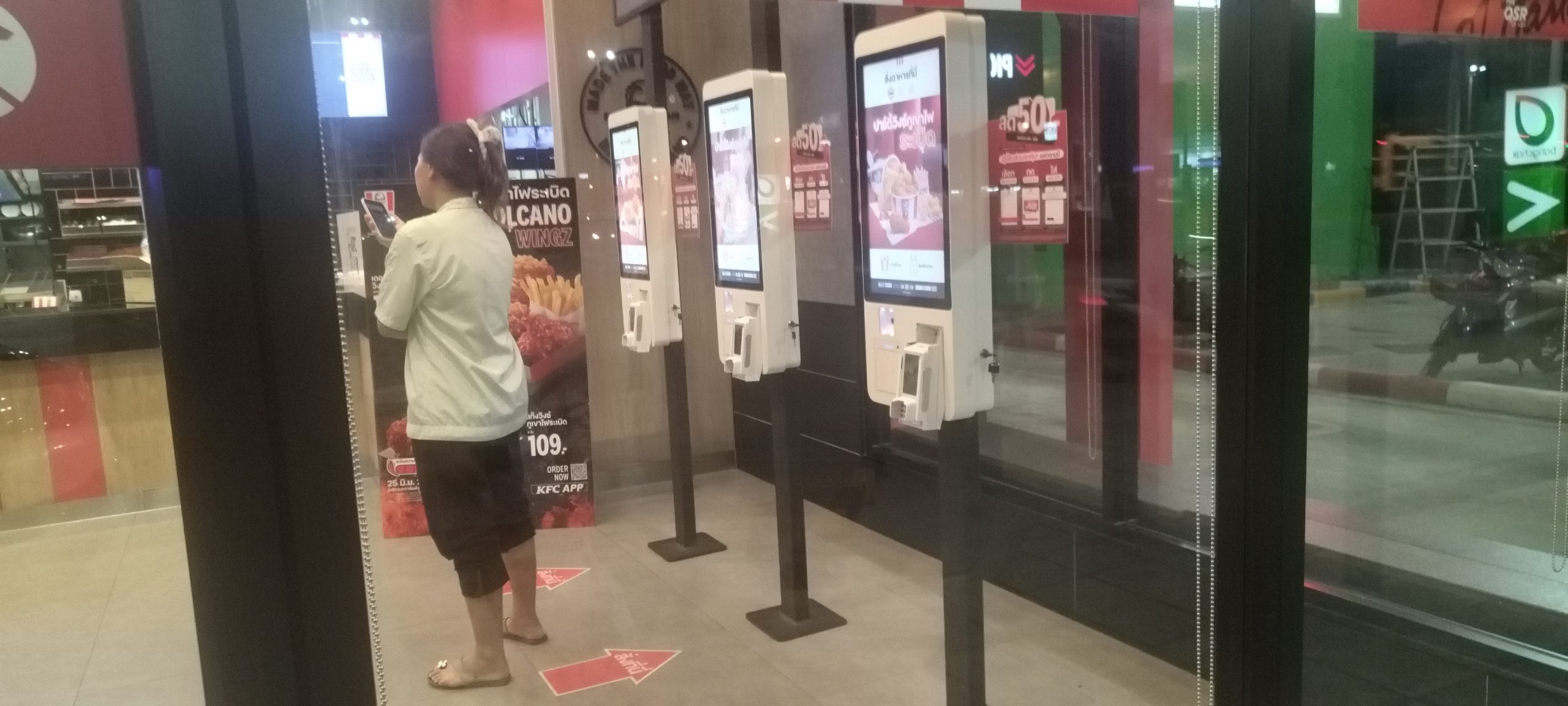
The payment stage fully balances convenience and variety, covering today’s mainstream spending habits. cards, mobile wallets, QR codes and stored-value accounts can all be used, and biometric payment where permitted is also supported – no phone, no payment code needed; settlement is completed quickly via facial verification. Diverse payment options suit guests of all age groups, effectively diverting pressure from the cash register at peak times and reducing guest queuing. Once payment is confirmed, order information is transmitted to the kitchen system in real time; the kitchen receives the preparation ticket directly, with no need for staff to relay it, reducing wrong and missed orders at the source. When the food is ready, the device links with the number-calling system to notify guests to pick up their order, fully automating the flow from order placement to pickup.
For restaurant operators, the kiosk’s greatest value lies in two dimensions: cost reduction with efficiency gains, and marketing empowerment. Labor costs have always been a major expense for restaurants, and hiring difficulties and high staff turnover are common pain points for small stores. Self-ordering terminals take over repetitive ordering and cashier work, freeing up register staff so employees can devote more energy to food preparation, cleanliness, and guest service. At peak hours, multiple terminals serve guests in parallel, shortening queues and reducing traffic lost to long waits. Orders sync automatically to the kitchen, reducing human error and further reducing complaint risks – delivering sustained business returns over the long run.
Beyond solving efficiency pain points, the device also serves as the store’s marketing vehicle, embedding marketing actions throughout the guest’s ordering journey. The home-screen ad slot can be refreshed at any time; new product launches and holiday campaigns can be pushed directly, and guests receive marketing messages as soon as they approach the device – low-cost store promotion. The intelligent recommendation menu adjusts its display logic per restaurant operator settings, guiding guests to add combo meals or pair snacks and drinks to boost per-guest spending. The “face-scan-to-membership” feature addresses the difficulty many stores face in recruiting new members: guests register instantly while dining. The back office comes with a complete set of marketing tools for member stored-value programs, coupon distribution, and targeted campaign pushes – retaining existing guests and reactivating repeat purchases, achieving integrated traffic acquisition and guest retention. It is not merely an ordering tool but a digital engagement channel for the store’s loyalty operations.
The guest experience improvements are equally significant. Under the traditional manual ordering model, servers handle heavy guest volumes at peak hours, communication is rushed, and guests can feel pressured while choosing dishes. The self-ordering model hands the choice back to guests: guests browse the menu at their own pace, viewing pictures, prices, and promotions, and complete their order calmly – minimal interaction with staff required – for a low-pressure purchasing experience. The whole interaction logic is simple and clear, with a low learning curve; guests can complete all operations independently with almost no guidance.
Amid the wave of restaurant digital transformation, many restaurant operators fall into the trap of simply piling up equipment while ignoring whether the tools fit the store’s real operating scenarios. The self-ordering kiosk goes beyond being a mere hardware device: it connects ordering, payment, kitchen, and member marketing, solving real operational pain points through integrated software and hardware. It helps stores relieve hiring difficulties, high labor costs, and peak-hour congestion, while leveraging intelligent marketing tools to unlock spending potential and accumulate member assets. For small and medium restaurant operators wanting a digital upgrade on a limited budget, this solution offers a cost-effective path to implementation – starting from ordering, the very beginning of the consumption journey, and driving iterative upgrades to the store’s business model to achieve controllable costs, improved experience, and revenue growth all at once.
Practical Conclusion
See how digital restaurant ordering connects menu selection, payment, kitchen production and operational data in one coordinated service flow. The final configuration should be verified against the real menu, transaction flow, installation space and support plan before deployment.
Deployment and Operating Checks
Planning for digital restaurant ordering should begin with the actual service flow rather than a generic demonstration setup. Before launch, test the workflow associated with digital restaurant ordering during realistic peak demand and confirm how staff will assist users. Documentation for digital restaurant ordering should cover cleaning, updates, network recovery and peripheral checks. A deployment involving digital restaurant ordering should pass consistent information to payment and back-office systems.
Explore related hardware configurations in the self-service kiosk product range.