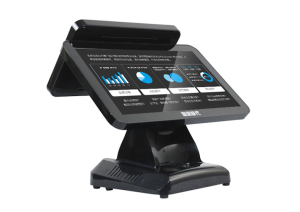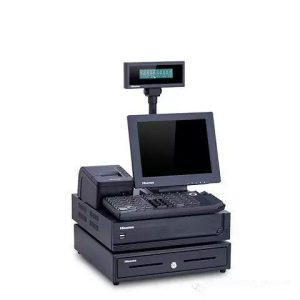
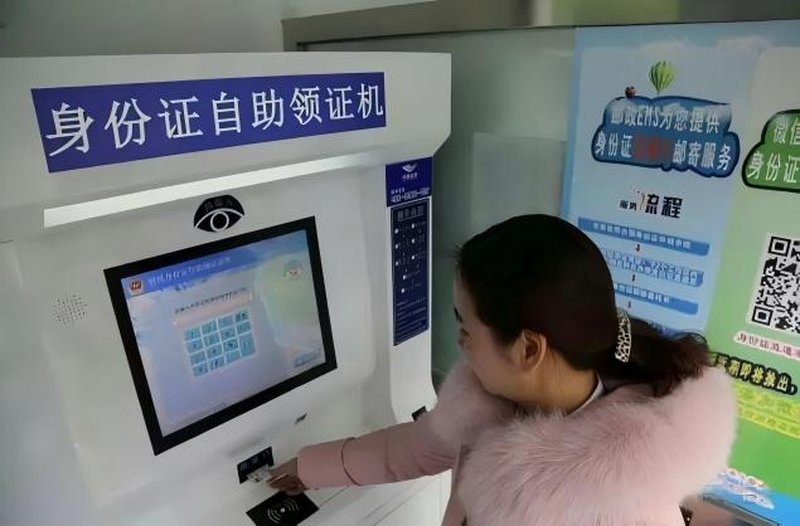
Deploying a high-performance Kiosk Barcode Scanner Integration provides commercial dining and retail venues with an advanced automated workflow. Self-service kiosk payments are primarily divided into two modes: kiosk-scan (reverse scanning, where the kiosk scans the customer) and customer-scan (forward scanning, where the customer scans the kiosk). Many kiosk manufacturers and operators debate which payment method is superior. Below is an operational comparison for reference:
Kiosk-Scan (Reverse Scan / Merchant-Scan Mode): The customer presents the payment barcode/QR code on their mobile phone, and the kiosk’s embedded scanner scans the code to complete the transaction. Advantages: Eliminates the risk of QR code tampering, supports offline mobile payment token generation, allows instant processing for small-amount PIN-free payments, and locks the transaction amount via the backend system to prevent input errors. Furthermore, it minimizes user operational steps, enabling significantly faster checkout throughput.
Customer-Scan (Forward Scan / Customer-Scan Mode): The customer opens their phone camera or payment app to scan a dynamic QR code on the kiosk screen or a static sticker and manually enters or confirms the payment. Disadvantages: Vulnerable to malicious QR code overlay attacks, requires continuous mobile internet connectivity on the customer’s phone, requires manual PIN entry or explicit authorization, and carries the risk of inputting incorrect payment amounts. In addition, the checkout process involves too many manual steps; if a kiosk has a 30-second automated timeout, customers may abandon payment midway due to tedious operational steps, resulting in lost orders.
1. Compact Embedded Structure Adapting to Diverse Kiosk Designs with a Kiosk Barcode Scanner Integration
Engineered for seamless integration, the compact embedded barcode scanning module measures just 61 mm in length, 65 mm in width, and 11 mm in thickness. The front surface utilizes a 4H-hardened optical PC protective window. The housing features standardized mounting screw holes and supports two installation methods: secure screw fastening to the internal bezel of the kiosk panel via four screws, or direct adhesion using industrial 3M tape. The assembly workflow is simple, eliminating the need for complex mounting fixtures or jigs.
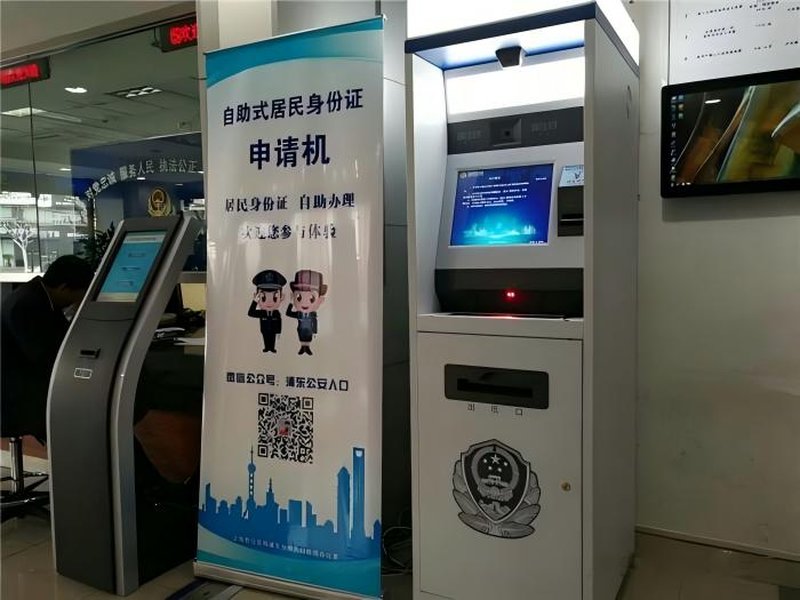
The ultra-thin, compact form factor fits effortlessly into confined kiosk internal chassis spaces without competing for room with industrial motherboards, power supplies, or thermal dissipation structures. Whether for large-scale government self-service all-in-one terminals, mini smart vending kiosks, intelligent electronic lockers, or desktop queuing and ticketing units, the module enables clean, aesthetically pleasing panel cutouts without compromising overall industrial design, helping kiosk OEMs reduce structural tooling and molding costs.
2. Robust Decoding Performance for Reliable Multi-Scenario Barcode Reading
Equipped with a 640×480 global-shutter CMOS image sensor and proprietary low-level decoding algorithms, the module quickly identifies all mainstream 1D barcodes and 2D QR codes. This includes retail commodity barcodes, smartphone screen payment codes, printed receipt QR codes, and industrial Data Matrix traceability codes, providing comprehensive coverage for all self-service terminal scanning scenarios.
To address the common vulnerability of kiosks operating under direct sunlight outdoors or near glass storefronts, the module features optimized optical fill-lighting that automatically adjusts LED brightness. Even under direct glare, smartphone screen reflections, wrinkled or worn paper barcodes, and lightly soiled surfaces, the scanner delivers fast, pinpoint decoding, preventing transaction lag caused by repeated user realignment attempts.
3. Multi-Interface and Wide-Voltage Compatibility Slashing R&D and Integration Costs
Electrical compatibility is one of the core value propositions of an embedded module. The XT206M3 delivers wide-voltage adaptation and multi-interface support, streamlining circuit engineering directly from the hardware design phase:
Power Supply: Supports a wide voltage input range from 3.3V to 24V DC. It can connect directly to the kiosk’s internal power supply unit without requiring supplementary voltage regulators or level-shifting circuit boards, reducing total bill-of-materials (BOM) costs and simplifying internal hardware architecture.
Data Interfaces: Offers flexible options including USB, RS232 serial port, TTL level, and flexible flat cable (FPC). The USB interface operates in driver-free HID keyboard mode (plug-and-play), transmitting scanned barcode data directly into mainstream operating systems including Windows, Android, Linux, and macOS. The RS232 interface connects reliably to industrial motherboards and PLCs to satisfy enterprise-grade kiosk communication standards, while TTL and FPC connect directly to microcontrollers (MCUs) and ARM host boards, catering to streamlined smart lockers, access control units, and compact IoT edge controllers. In summary, integrating a reliable Kiosk Barcode Scanner Integration solution reduces operational labor costs, shortens customer wait times, and maximizes store throughput.
Looking for customized Kiosk Barcode Scanner Integration hardware, commercial touchscreen displays, or OEM/ODM self-service solutions? Feel free to contact the ZXTLCD engineering team for free consultations, product specifications, and tailored volume pricing.
Deploying a Self-Service Solution?
To elevate customer experience and streamline ordering or ticketing workflows, explore our AI Self Service Terminal with Large Touchscreen or the versatile Self Service Kiosk for Cinema & Ticketing. For custom hardware integrations, discover our complete line of Custom Self-Service Kiosks or consult our engineering team for sample evaluation.