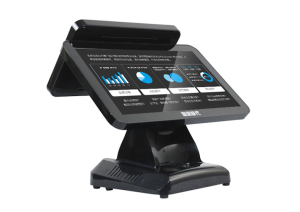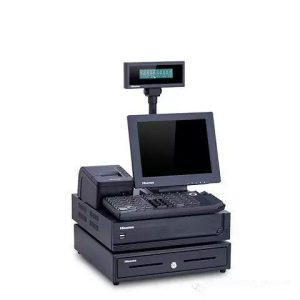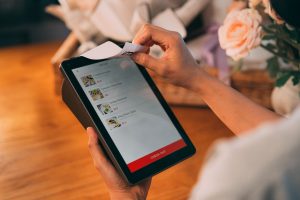
Self-Ordering Kiosk Selection Criteria: Is a Self-Service Ordering Kiosk Right for Your Store? 4 Evaluation Criteria
Deploying a modern Self-Ordering Kiosk Selection Criteria has become a vital strategic step for businesses aiming to optimize workflow. “I heard the restaurant next door installed a self-service ordering kiosk. Should we install one too to save on labor?”
If a store owner makes a capital decision based solely on this single question, the actual operational outcome is often underwhelming. What truly determines whether a self-service ordering kiosk is right for an establishment is neither its geographic location nor passing market hype, but rather the venue’s customer demographic, peak order dynamics, menu structure, and overarching business model.
Therefore, prior to introducing self-service ordering kiosks, it is essential to conduct a rigorous evaluation grounded in real-world store operations.
Why You Shouldn’t Decide Based Solely on “Saving Labor”
Most operators instinctively view self-service ordering kiosks as labor-saving tools. In practical operations, however, a more accurate characterization is this: a self-service kiosk is primarily an order-throughput scaling tool.
Its fundamental commercial value lies in processing more orders within the same time window and preventing customer drop-off caused by intimidating cashier queues.
Labor savings are merely a potential secondary byproduct. If “reducing headcount” is made the sole objective, operators frequently encounter an awkward paradox: intending to eliminate a frontline worker, they find that after installation, staff must still be stationed next to the machine full-time to assist confused diners.
Consequently, evaluating whether a kiosk suits your establishment requires looking far beyond payroll reduction alone; it requires assessing whether the technology truly complements your operational model.
4 Key Variables to Determine If a Self-Service Kiosk Fits Your Store
1. Customer Demographics
When kiosks are advantageous:
The customer base consists predominantly of younger consumers and digital natives who navigate touchscreens intuitively and can complete orders autonomously.
When caution is advised:
Elderly patrons or consumers unfamiliar with digital interfaces make up a substantial proportion of guests, requiring continuous staff supervision and hands-on guidance at the terminal.
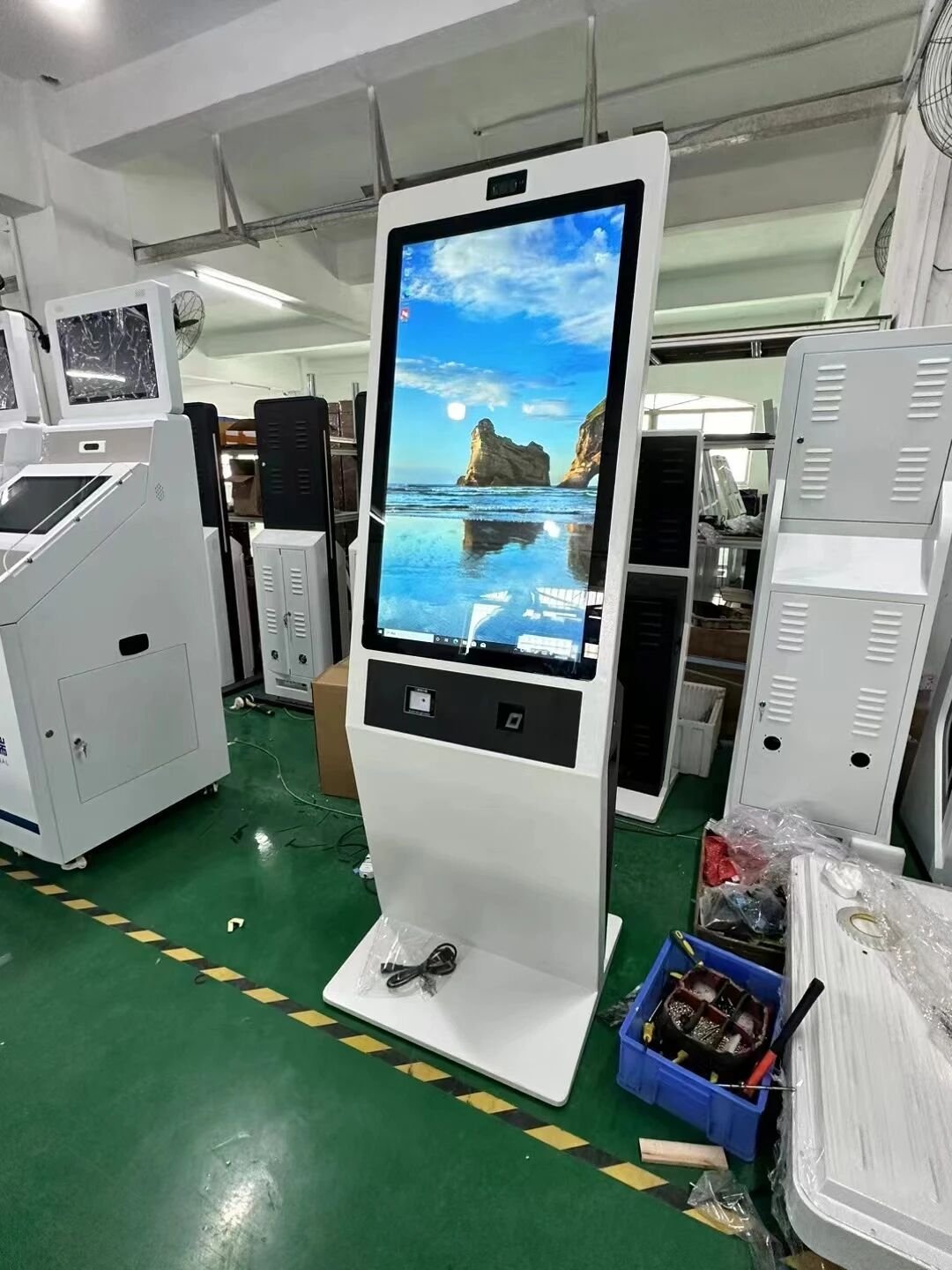
Customer demographics represent one of the most critical determinants governing kiosk utilization and success.
2. Peak Rush Concentration
When kiosks are advantageous:
Order volume is concentrated within narrow, intense rush windows (such as lunch or dinner rushes), resulting in sudden surges in ticket counts over short periods.
When caution is advised:
Foot traffic is evenly distributed throughout the day, with steady, low-density order placement and no pronounced rush spikes.
If a venue regularly suffers from bottlenecks during specific rush hours, self-service kiosks can effectively relieve pressure on traditional cashiers and dramatically increase throughput capacity when it matters most.
3. Menu Architecture
When kiosks are advantageous:
The menu features a streamlined, standardized structure where diners can swiftly select dishes, sides, and combo bundles directly from visual screen categories.
When caution is advised:
Dishes require extensive bespoke modifications, guests frequently require verbal culinary recommendations, or tickets contain complicated multi-tiered permutations.
The more inherently suited a menu is to visual digital presentation, the higher the operational efficiency achieved by self-service terminals.
4. Average Ticket Size and Table Turnover Efficiency
When kiosks are advantageous:
Accelerating ordering and checkout velocity directly impacts total revenue, and maximizing ordering throughput and dining turnaround is essential.
When caution is advised:
Guests visit primarily for extended, leisurely dining experiences, where transaction speed exerts negligible influence on overall business performance.
Across these four variables, the more favorable conditions a venue meets, the more tangible and transformative the return on investment will be.
Counterexample: Stores with Specific Customer Bases May Incur Higher Labor Costs
This is precisely where missteps frequently occur.
If an establishment caters to a large percentage of patrons who are uncomfortable navigating digital self-service hardware, guests will inevitably require employee guidance at every step of the transaction.
Under these circumstances, an investment intended to reduce labor ends up demanding dedicated staff to hand-hold users. Operating costs fail to decrease, and floor stress may even escalate due to redundant supervisory tasks.
Therefore, one should never assume that “deploying a self-service kiosk automatically cuts payroll.”
A more sensible methodology is to carefully analyze your actual diner profile.
If large volumes of young office workers flood your counters during lunch hour, kiosks represent a highly lucrative upgrade.
If your store primarily serves neighborhood patrons who value face-to-face interaction and require hands-on support, consider a balanced hybrid model combining assisted ordering, mobile QR ordering, or traditional hospitality.
Finished Installing? Don’t Overlook Revenue Data Integration
Following hardware deployment, another commonly neglected pitfall is whether sales data across disparate channels can be consolidated into a unified management architecture.
If self-service kiosks, traditional POS counters, mobile QR channels, and third-party delivery platforms function as isolated silos, store managers are forced to manually reconcile figures from multiple backends at the end of each day.
This not only inflates clerical workloads but also invites statistical discrepancies and data gaps, obscuring accurate business performance insights.
Therefore, when selecting a self-service kiosk, never evaluate it merely as a standalone piece of hardware; verify where transaction records and revenue figures ultimately consolidate.
ZXTLCD self-service dining solutions can be tailored to the restaurant’s existing POS and ERP ecosystem, enabling frictionless data interoperability across kiosk terminals, counter cashiers, mobile ordering, and kitchen display systems.
Whether a guest orders via a self-service terminal or alternative digital touchpoints, all order data should funnel seamlessly into a centralized management workflow.
For restaurant operators, verifying whether financial data can be effortlessly consolidated after adding a new ordering terminal is an indispensable technical criterion.
Leasing vs. Purchasing: Factoring in True Total Cost of Ownership
Beyond upfront equipment acquisition prices, restaurateurs must evaluate long-term total cost of ownership (TCO) when deploying self-service hardware.
Leasing:
Involves relatively lower initial capital expenditure. Equipment maintenance, warranty coverage, and hardware replacement packages can be bundled into operating expenses. This model is exceptionally well-suited for brands looking to validate self-service feasibility, as well as temporary pop-ups or seasonal operations.
Purchasing:
If an operator commits to long-term deployment across multiple locations and requires permanent terminal assets, outright purchasing provides superior financial returns over extended operational horizons.
Crucially, hardware purchase price does not represent the full cost. Subsequent expenses may encompass payment gateway fees, network connectivity, preventive maintenance, and ongoing menu programming or CMS updates.
Because overall costs vary across hardware specifications, software modules, and service agreements, operators should conduct a holistic TCO comparison tailored to actual operational requirements rather than evaluating equipment sticker prices in isolation.
Pre-Deployment Checklist for Self-Service Ordering Kiosks
Before committing to kiosk installation, run through this practical diagnostic checklist:
1. Do digital-native consumers comfortable with self-service touchscreens make up a substantial share of your foot traffic?
2. Is order volume heavily concentrated during specific, high-intensity rush hours?
3. Is your menu layout and item structure intuitive enough for rapid touchscreen navigation?
4. Can transactional data generated by the kiosk interface directly with your current restaurant management software?
5. Can daily revenue across all offline and online channels be consolidated into a unified dashboard?
6. Have leasing and outright purchase proposals been comprehensively evaluated against ongoing maintenance, software, and payment processing fees?
7. If customer guidance is anticipated, has the associated floor labor cost been factored into operational projections?
If the majority of these questions yield affirmative, confident answers, your venue is well-positioned to advance toward full kiosk implementation.
Frequently Asked Questions (FAQ)
Q. Can installing a self-service ordering kiosk reduce staff headcount?
A. Not necessarily. Actual outcomes depend on customer demographics, peak transaction velocity, and service workflows. Kiosks expand order throughput capacity; however, if patrons constantly require staff intervention to complete orders, payroll savings may be negligible.
Q. Can we deploy kiosks if our store has a large elderly customer base?
A. This warrants careful evaluation. If employees must routinely stand by to guide customers through every step, that ongoing labor overhead must be accounted for. In such venues, combining personal table service with simplified mobile or assisted ordering often yields better results.
Q. How is sales revenue data managed across systems?
A. When kiosks are properly integrated with your central restaurant POS and backend management architecture, all transactional data consolidates into a single reporting workflow. When choosing hardware, prioritizing open software integration and unified data synchronization is essential.
Q. Is leasing or purchasing more cost-effective?
A. Leasing provides superior operational agility for testing market reception or short-term venues. Outright purchasing is more economical for established concepts committed to permanent multi-terminal deployment. Final decisions should factor in hardware costs, software licenses, payment fees, and long-term maintenance.
Conclusion
A self-service ordering kiosk is not a one-size-fits-all necessity for every single restaurant. The decisive factor is whether the technology harmonizes with your customer base, order patterns, menu structure, and business model.
For high-turnover venues characterized by sharp peak rushes, tech-comfortable diners, standardized menus, and high demand for transaction speed, self-service kiosks serve as transformative engines for operational excellence.
ZXTLCD is dedicated to delivering professional self-service ordering kiosks and commercial intelligent display solutions. Engineered for flexible customization across diverse spatial layouts, menu structures, and POS architectures, ZXTLCD empowers foodservice brands to systematically build agile, high-efficiency digital dining operations. In summary, integrating the right Self-Ordering Kiosk Selection Criteria provides long-term operational resilience, reduced labor friction, and enhanced customer satisfaction.
Looking for customized Self-Ordering Kiosk Selection Criteria solutions, commercial touchscreen displays, or OEM/ODM self-service hardware? Feel free to contact the ZXTLCD engineering team for free consultations, product samples, and tailored technical specifications.
Deploying a Self-Service Solution?
To elevate customer experience and streamline ordering or ticketing workflows, explore our AI Self Service Terminal with Large Touchscreen or the versatile Self Service Kiosk for Cinema & Ticketing. For custom hardware integrations, discover our complete line of Custom Self-Service Kiosks or consult our engineering team for sample evaluation.