Deploying a modern Restaurant Self-Service Ordering Kiosk has become a vital strategic step for businesses aiming to optimize workflow. Labor costs, staffing challenges, and long queues during peak hours are becoming important concerns for restaurants around the world. As customer expectations continue to change, restaurant operators are looking for practical ways to improve service efficiency without making the dining experience more complicated.
A self-service ordering kiosk can provide a simple solution.
Instead of relying entirely on employees to take every order, customers can use a digital touchscreen to browse the menu, select items, customize their orders, review the details, and complete the ordering process.
For restaurants with busy service periods, large menus, or repetitive front-of-house tasks, this approach can help create a more efficient ordering workflow.
Restaurant Self-Service Ordering Kiosk: Why Are More Restaurants Considering Self-Service Ordering?
Traditional restaurant ordering often depends on employees for almost every step of the process.
A customer enters the restaurant, waits for an available employee, reviews the menu, communicates their selections, confirms modifications, and waits while the order is entered into the restaurant system.
When customer traffic is low, this process can work smoothly.
The situation can be very different during lunch and dinner rushes.
Several customers may arrive at the same time, creating a queue at the ordering counter. Employees have to switch continuously between taking orders, answering questions, processing payments, and handling other service tasks.
A self-service ordering kiosk provides an additional ordering channel.
Customers can interact directly with the digital menu instead of waiting for an employee to handle every step. This can reduce pressure on the front counter and make the ordering process more flexible.
Reduce Repetitive Front-of-House Work
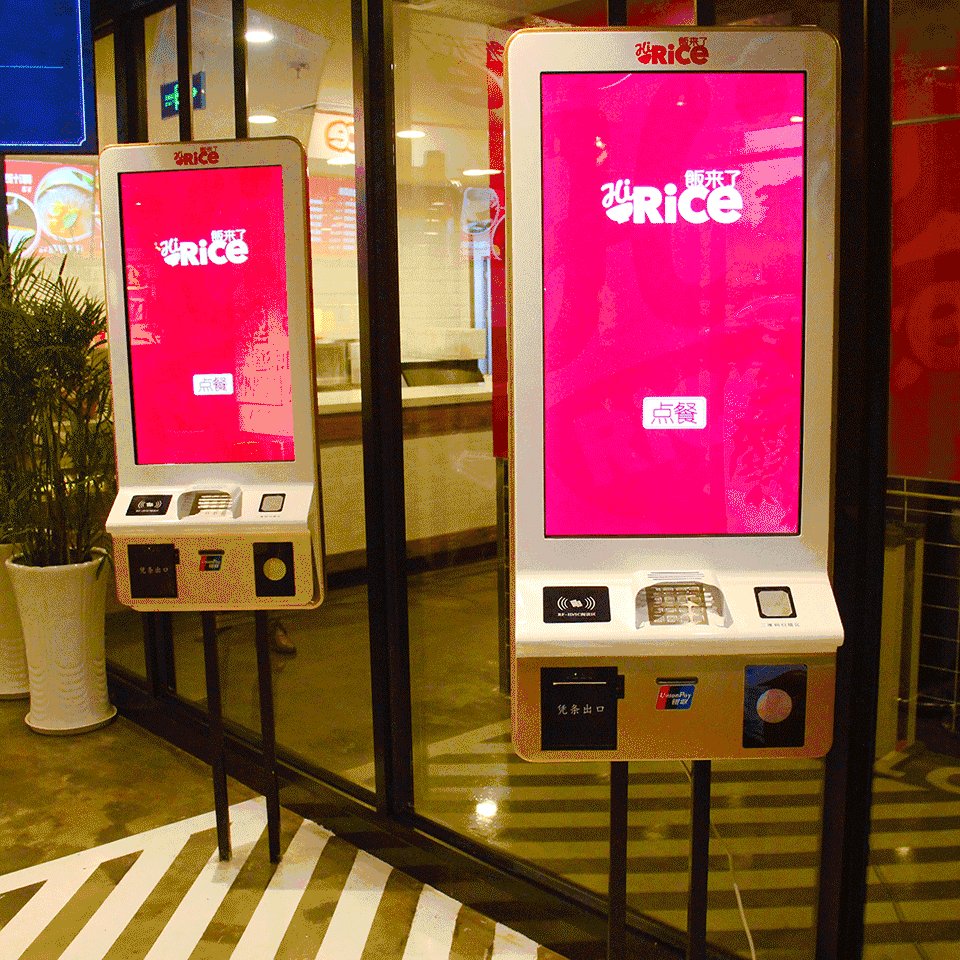
One of the main advantages of a self-service ordering kiosk is reducing repetitive ordering tasks.
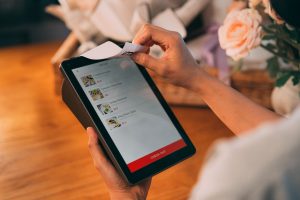
Customers can browse menu categories, select products, choose available options, add special instructions, and review their selections directly on the touchscreen.
This means employees do not need to repeatedly perform the same basic actions for every customer.
Instead, staff can spend more time on tasks that require human attention, such as food preparation, order coordination, dining-area service, and responding to customer requests.
The goal is not simply to replace employees.
A more practical approach is to use digital technology to help employees work more efficiently.
By moving routine ordering tasks to a self-service interface, restaurants can make better use of their existing workforce.
Improve Ordering Efficiency During Busy Hours
Peak dining periods are often the biggest test of restaurant operations.
When many customers arrive at once, the ordering counter can quickly become a bottleneck.
A self-service ordering kiosk allows customers to complete the ordering process independently rather than waiting for an employee to finish with the previous customer.
Customers can browse the menu at their own pace and confirm their selections before submitting the order.
For restaurants with high customer traffic, multiple ordering devices can also provide additional ordering capacity.
This can help reduce waiting time and improve customer flow through the ordering area.
The approach can be useful in a wide range of environments, including fast-food restaurants, casual dining locations, cafés, bakeries, food courts, beverage shops, and takeaway restaurants.
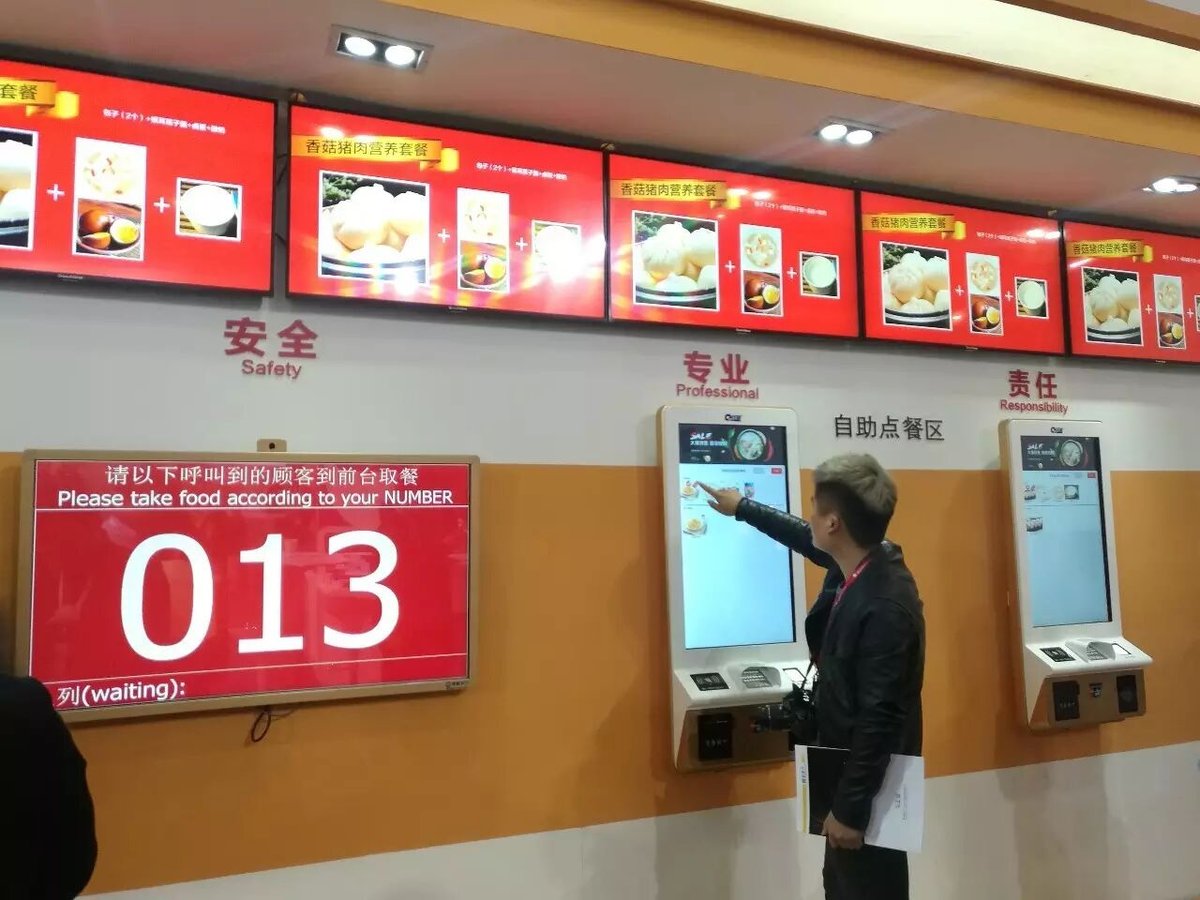
Let Customers Control Their Own Orders
Order accuracy is another important consideration.
In traditional ordering, information is often communicated verbally between the customer and employee. When an order contains multiple options or special requirements, misunderstandings can sometimes occur.
For example, a customer may want to change an ingredient, select a different portion size, add a topping, or leave a special instruction.
With a self-service ordering kiosk, customers can make these selections directly on the screen.
They can see their choices, make changes, and review the order before submitting it.
This creates a more direct connection between the customer’s selections and the digital order information.
For restaurants with highly customizable menus, this can make the ordering process clearer and more consistent.
Make Digital Menus Easier to Navigate
A digital menu can also provide a more flexible way to present restaurant products.
Instead of displaying every item on a single static menu, restaurants can organize products into categories such as main dishes, snacks, drinks, desserts, and meal combinations.
Images, descriptions, prices, options, and other relevant information can be displayed together.
Customers can then browse the menu according to their own needs.
For restaurants serving customers from different language backgrounds, digital menus can also be configured with multiple language options where required.
This can make menu information easier to understand and reduce unnecessary communication during the ordering process.
Create More Opportunities for Add-On Sales
A digital ordering interface can also help restaurants present relevant additional options.
When a customer selects a main dish, the system can display suitable drinks, side dishes, toppings, desserts, or upgrade options.
These recommendations can be presented at appropriate points in the ordering process without requiring employees to manually make the same suggestion to every customer.
For example, a customer ordering a meal may also see an option to add a beverage or side dish.
The customer remains in control of the final order, while the restaurant gains another opportunity to present relevant menu choices.
The actual impact on order value depends on the restaurant’s menu design, pricing strategy, product combinations, and customer behavior.
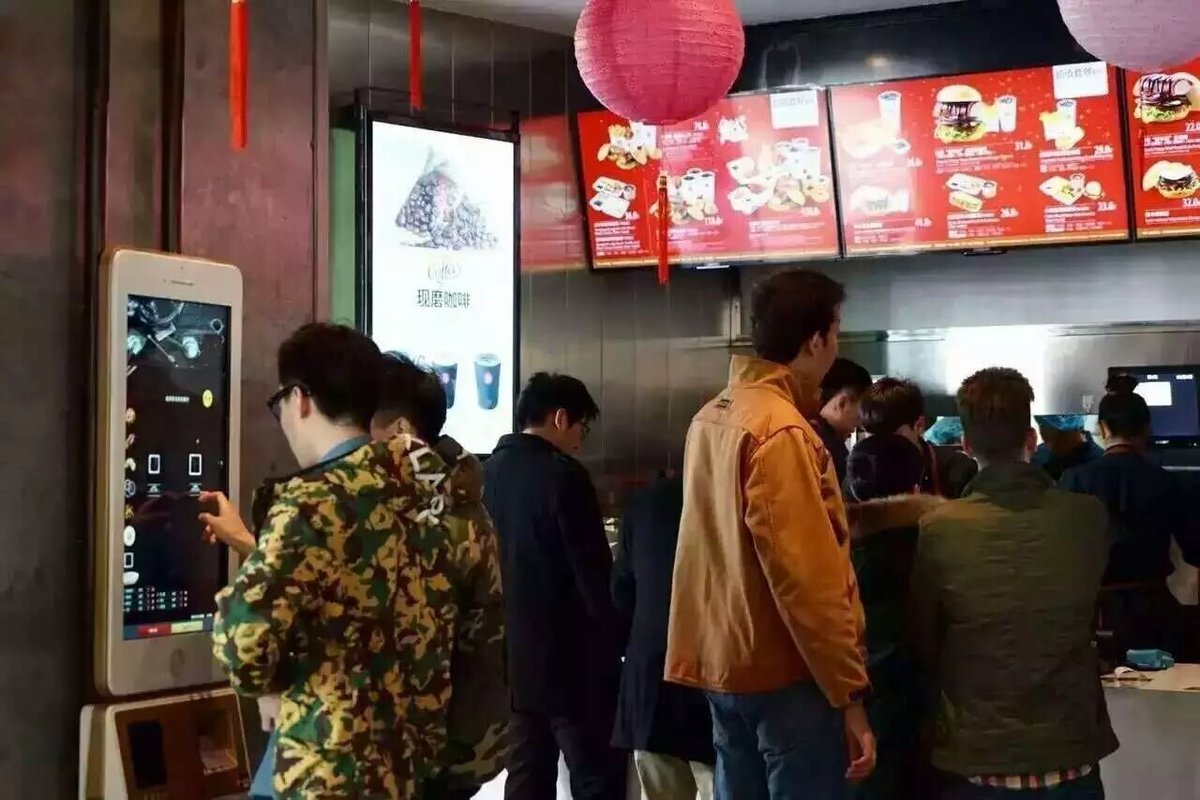
A Simple Self-Service Ordering Workflow
A typical digital ordering process can follow a straightforward sequence:
Enter the restaurant → Browse the digital menu → Select items → Customize the order → Review selections → Complete payment → Receive order information → Kitchen prepares the order
The exact workflow can be configured according to the restaurant’s operating system and service model.
The important point is that customers can complete many routine ordering steps independently.
This can reduce pressure at the front counter while creating a more consistent digital ordering experience.
Compact Equipment for Restaurants With Limited Space
Restaurant space is another practical consideration.
Not every restaurant has enough room to build a large ordering area or add additional service counters.
A compact self-service ordering kiosk can provide another option.
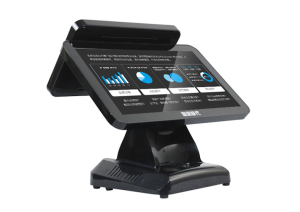
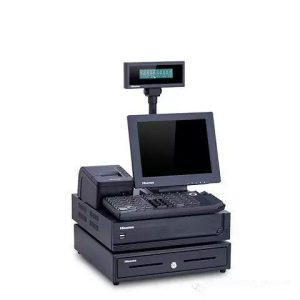
A desktop-style device can be positioned on a suitable counter or tabletop, depending on the restaurant’s layout.
This allows restaurants to introduce digital self-service without making major changes to the existing floor plan.
For smaller restaurants, cafés, takeaway stores, and other space-conscious businesses, compact equipment can make digital ordering easier to implement.
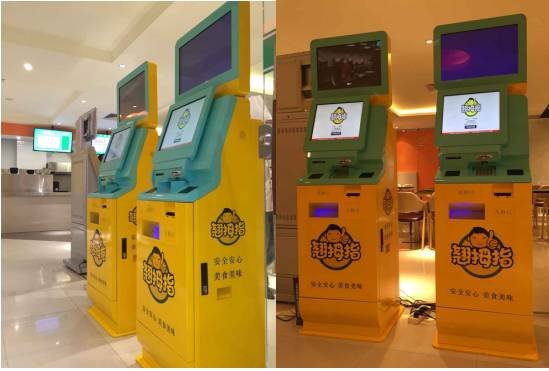
ZXTLCD Self-Service Ordering Solutions
ZXTLCD provides digital display and self-service solutions for commercial environments, including restaurant applications.
A self-service ordering kiosk can be configured around the restaurant’s menu structure and operational requirements.
The digital interface can support menu browsing, product selection, customization, order confirmation, and other stages of the ordering process according to the system configuration.
By introducing a digital ordering channel, restaurants can give customers more control over the ordering experience while helping employees reduce repetitive front-of-house work.
The solution can also be adapted to different restaurant layouts and service models.
More Than a Digital Ordering Device
The value of a self-service ordering kiosk goes beyond simply allowing customers to place orders.
It can help restaurants rethink how customers, employees, and kitchen operations work together.
Customers can browse and select products independently.
Employees can spend less time on repetitive order entry.
Digital menus can present products in a clearer and more organized way.
Orders can move through the restaurant’s digital workflow with fewer manual steps.
For restaurants facing rising labor pressure, peak-hour queues, and increasingly complex menus, self-service ordering can become an important part of a broader digital transformation strategy.
A compact ordering kiosk may take up only a small amount of space, but it can provide an additional service channel for the entire restaurant.
With the right configuration, a self-service ordering kiosk can help restaurants reduce waiting, simplify ordering, improve operational efficiency, and create a more convenient dining experience.
For modern restaurants looking to improve efficiency without unnecessarily complicating their operations, digital self-service ordering is a practical step toward a smarter and more flexible service model. In summary, integrating the right Restaurant Self-Service Ordering Kiosk provides long-term operational resilience, reduced labor friction, and enhanced customer satisfaction.
Looking for customized Restaurant Self-Service Ordering Kiosk solutions, commercial touchscreen displays, or OEM/ODM self-service hardware? Feel free to contact the ZXTLCD engineering team for free consultations, product samples, and tailored technical specifications.
Deploying a Self-Service Solution?
To elevate customer experience and streamline ordering or ticketing workflows, explore our AI Self Service Terminal with Large Touchscreen or the versatile Self Service Kiosk for Cinema & Ticketing. For custom hardware integrations, discover our complete line of Custom Self-Service Kiosks or consult our engineering team for sample evaluation.