Cafeteria Self-Service Ordering Kiosk: Why Are Some Employee Cafeterias Using Self-Service Ordering Kiosks?
Deploying a modern Cafeteria Self-Service Ordering Kiosk has become a vital strategic step for businesses aiming to optimize workflow. Typically, we see self-service ordering kiosks, all-in-one ordering and POS terminals, and similar self-service hardware in commercial dining establishments. Today, however, an increasing number of corporate staff restaurants and cafeterias are also introducing self-service ordering kiosks.
Many cannot help but ask: Why do employee cafeterias need self-service ordering kiosks? What exact benefits and advantages do they offer?
1. More Diversified Payment Methods
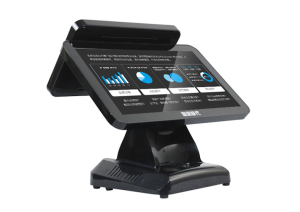
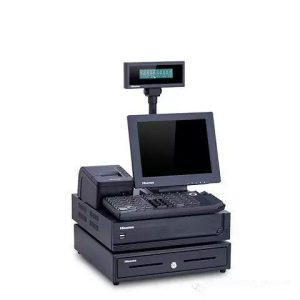
Traditional cafeteria checkout devices usually support only limited payment options. To meet the diverse payment preferences of different employees, deploying self-service ordering kiosks or all-in-one ordering and cashier terminals enables support for QR code payments, contactless payments, and multiple other methods based on the software system and hardware configuration.
Whether regular corporate employees or outside cafeteria guests, diners can quickly complete ordering and payment using the on-site payment methods supported, making the entire dining journey far more convenient.
2. Both Payment/Top-Up and Queue Numbering/Ordering
Conventional cafeteria POS terminals primarily handle billing and charging. In contrast, self-service ordering kiosks integrated with catering management software and related peripherals unlock a much wider range of applications.
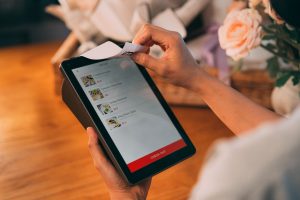
For instance, depending on system configuration, self-service kiosks can handle account top-ups, balance inquiries, and dining history checks. Equipped with thermal receipt printers, they can also issue queuing tickets and print kitchen order slips.
For example, beyond self-serve buffet bars, some employee cafeterias offer set meals and made-to-order dishes. After an employee selects a combo meal and submits the order on the self-service kiosk, they can use the printed receipt or order ticket to pick up their food in sequence at the corresponding counter. This eliminates chaotic queues and enhances food preparation and pickup efficiency.
3. Personalized Flavor Options and Higher Employee Satisfaction
Self-service ordering terminals can provide employees with flexible taste customizations through software settings, such as “less salt,” “extra spicy,” or “no specific ingredients.”
During rush hours, traditional manned service windows must rapidly take orders and communicate with crowds, offering very limited room for personalized requests. With self-service kiosks, extensive flavor and meal options can be displayed directly on the touchscreen, empowering employees to customize dishes according to their dietary preferences.
This autonomous ordering approach cuts down on communication time while giving employees greater freedom of choice, thereby elevating their overall dining satisfaction.
4. Information Dissemination and Nutritional Guidance
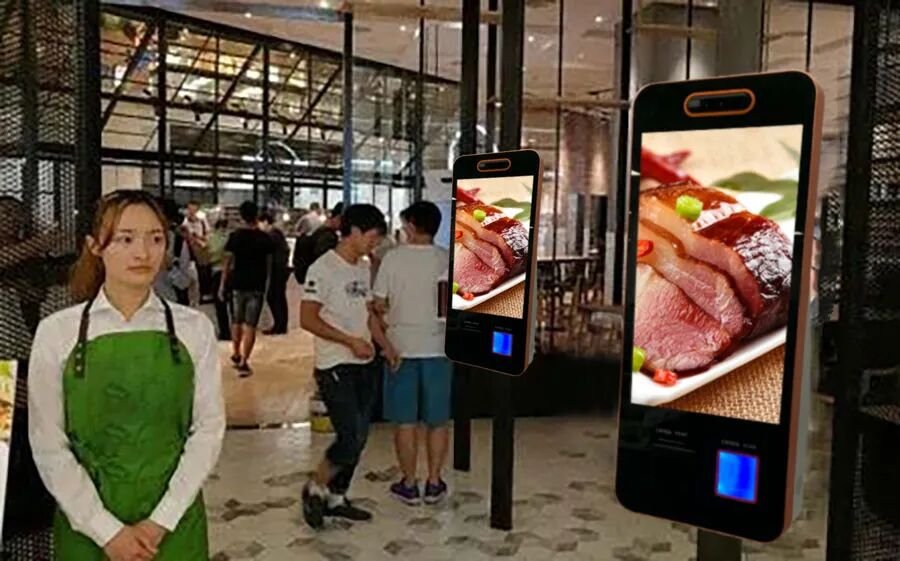
Self-service ordering kiosks and all-in-one POS terminals are typically equipped with high-definition commercial touchscreens. Beyond displaying menus and handling orders, the screen can be configured during idle times to showcase dish profiles, nutritional facts, and healthy eating advice.
For example, the display can present key ingredients, calorie and nutrient breakdowns, combo details, and dietary recommendations for various dishes, giving employees clear, intuitive insights as they order.
In this way, the kiosk not only serves as an ordering and payment portal but also functions as a digital signage terminal for cafeteria announcements and nutritional education.
Self-Service Kiosks Boost Employee Cafeteria Operational Efficiency
During peak cafeteria dining hours, large waves of staff arrive at the same time, and manual ordering and cashier counters quickly form bottlenecks.
By deploying multiple self-service ordering kiosks, menu browsing, order confirmation, and payment can be offloaded to self-service terminals. This dramatically shortens transaction times and alleviates peak-hour queuing pressure.
Simultaneously, digital orders flow directly into the back-office management system, eliminating manual record-keeping and billing errors while helping cafeteria managers plan staffing and kitchen meal prep schedules more effectively.
For high-volume corporate staff dining halls, self-service kiosks enhance service speed while establishing a streamlined, transparent digital dining workflow.
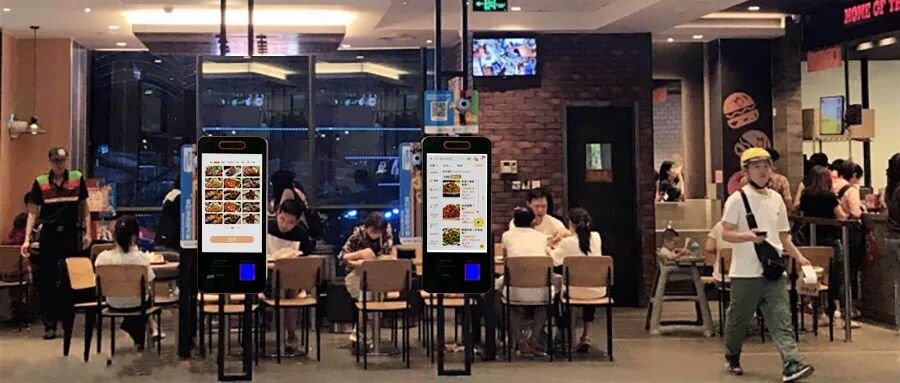
ZXTLCD Self-Service Ordering Kiosks Ideal for Employee Cafeterias
ZXTLCD self-service ordering kiosks feature large high-definition commercial touchscreens that vibrantly display food photography, pricing, combo promotions, and menu details. Employees can browse menus, select items, and confirm orders with simple touch gestures.
The hardware can be customized with 1D/2D barcode scanners, high-speed thermal receipt printers, and other functional modules to support payment processing, order verification, and slip printing.
Moreover, ZXTLCD kiosks adopt a modular design, allowing flexible hardware configurations tailored to the operational demands of different corporate dining rooms. For scenarios requiring integration with existing catering management platforms, seamless software interface and peripheral adaptation can be readily achieved.
Beyond self-service ordering and billing, the large display of ZXTLCD kiosks can showcase new menu items, special combos, nutritional highlights, and cafeteria announcements—enabling a single piece of hardware to perform both self-service utility and digital signage marketing.
Why Are Employee Cafeterias Increasingly in Need of Self-Service Kiosks?
Employee cafeterias adopt self-service ordering kiosks not merely to cut manual labor, but more importantly to optimize the entire dining journey.
From menu browsing and dish selection to order submission, payment, receipt printing, and food collection, self-service terminals digitally interconnect every stage of the process.
Especially during concentrated dining peaks, self-service kiosks disperse pressure from traditional manned counters. They offer employees greater ordering autonomy while enabling cafeterias to process high order volumes with superior efficiency.
As corporate catering services advance toward digitalization and smart operations, self-service ordering kiosks are becoming essential infrastructure in corporate dining halls, institutional cafeterias, tech park food courts, and other centralized dining environments.
ZXTLCD provides tailor-made self-service kiosks, touch ordering terminals, and intelligent commercial display equipment across various application scenarios, helping employee cafeterias build a more convenient, efficient digital dining experience. In summary, integrating the right Cafeteria Self-Service Ordering Kiosk provides long-term operational resilience, reduced labor friction, and enhanced customer satisfaction.
Looking for customized Cafeteria Self-Service Ordering Kiosk solutions, commercial touchscreen displays, or OEM/ODM self-service hardware? Feel free to contact the ZXTLCD engineering team for free consultations, product samples, and tailored technical specifications.
Deploying a Self-Service Solution?
To elevate customer experience and streamline ordering or ticketing workflows, explore our AI Self Service Terminal with Large Touchscreen or the versatile Self Service Kiosk for Cinema & Ticketing. For custom hardware integrations, discover our complete line of Custom Self-Service Kiosks or consult our engineering team for sample evaluation.