

ZXT LCD is preparing 20 units of a 21.5-inch self ordering kiosk for a restaurant project in the United Kingdom. The equipment has not yet been shipped. The current work covers enclosure assembly, Windows system preparation, peripheral integration and inspection before packing. The project image shows a compact portrait-format terminal designed for customer-facing ordering areas rather than a general advertising display.
The confirmed configuration combines a built-in 5MP HD camera, an 80mm thermal printer, a scanner supporting the customer’s specified 2D/3D barcode workflow and a reserved mounting position for the selected POS terminal. These components must operate as one system with the customer’s ordering software, so the project is being checked around the actual restaurant process instead of treating every peripheral as an isolated option.
A Compact Portrait Format for Restaurant Ordering
The 21.5-inch portrait screen provides enough vertical space for menu categories, product photographs, customization options, order summaries and checkout controls while keeping the enclosure relatively compact. It can be positioned near an entrance, service counter or designated self-service zone without requiring the floor area of a larger freestanding terminal.
A clear interface should follow the sequence customers already understand: choose a category, select a product, confirm modifiers, review the basket and continue to payment or receipt handling. The physical height, viewing angle and touch area must be confirmed against the final installation environment so that the most frequently used controls remain accessible.
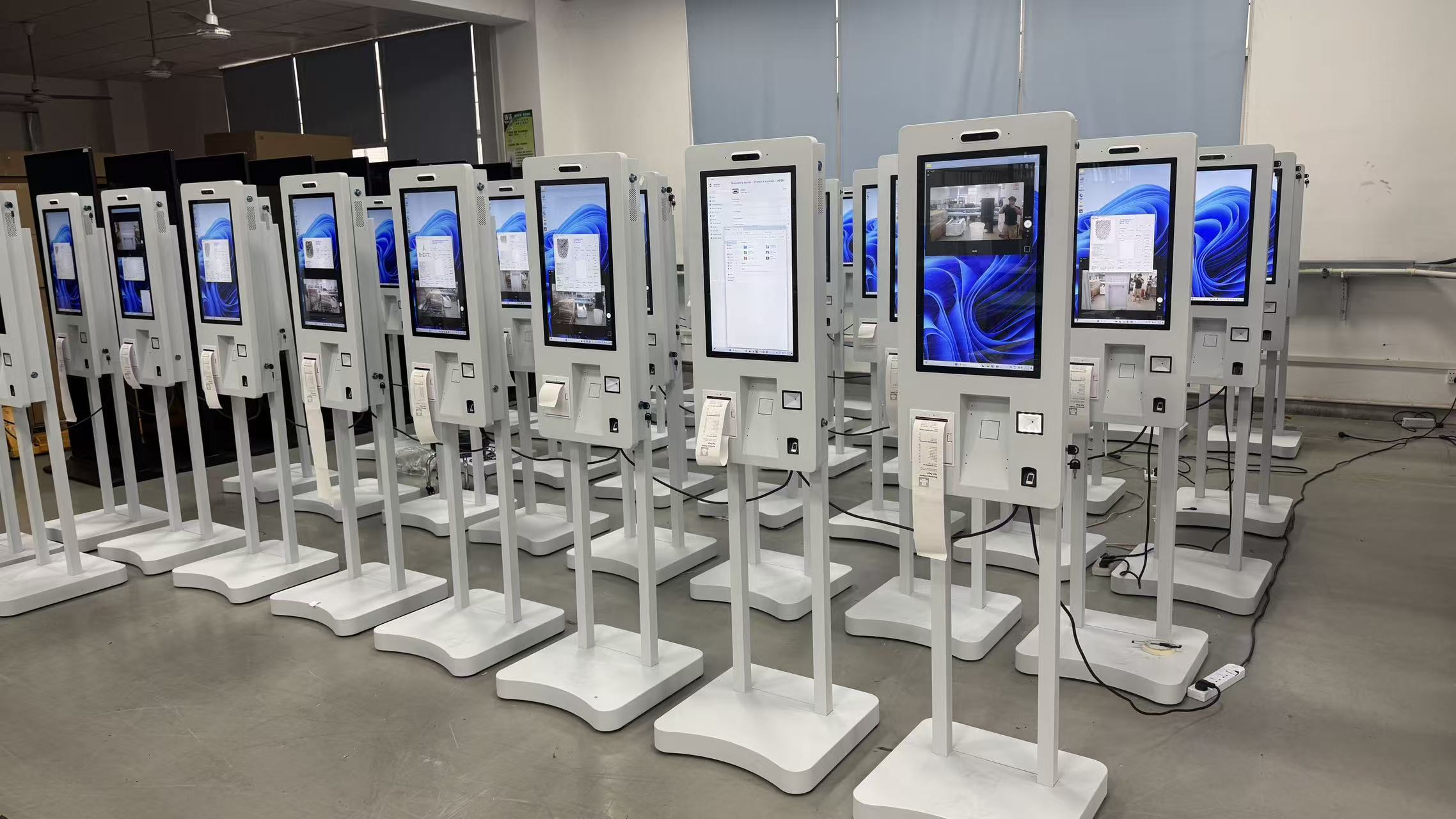
Windows Deployment for the 21.5-Inch Self Ordering Kiosk
Each 21.5-inch self ordering kiosk in this batch uses a Windows operating system. This provides a familiar platform when the UK customer or software integrator already works with compatible restaurant applications, browser-based ordering systems, device drivers and remote support tools.
Windows alone does not guarantee compatibility. The ordering application must recognize the camera, scanner, printer and payment device, send the correct printing commands and interpret the scanned data. Testing should therefore use the intended software build and real peripherals instead of confirming only that the operating system starts.
Built-In Camera and Barcode Scanner Support Different Inputs
The integrated 5MP HD camera gives the software a fixed visual-input position. Depending on the approved application, it may support image capture, membership interaction or remote assistance. It should not be described as facial recognition unless the dedicated software, permission process and UK privacy requirements have been confirmed.
The scanner on the 21.5-inch self ordering kiosk is prepared for the customer’s stated 2D/3D barcode requirement. In a restaurant workflow, scanning may connect coupons, membership codes, collection references or existing orders with the on-screen process. The software and scanner must use the same formats; enclosure integration alone cannot create the workflow.
80mm Thermal Printing for Receipts and Collection Tickets
An 80mm thermal printer can produce order numbers, transaction details, itemized receipts, collection instructions and software-generated barcodes or QR codes. The wider paper format provides more room for readable information than a narrow ticket while avoiding ink-cartridge replacement.
Routine operation still depends on practical access. Restaurant staff need to replace paper rolls, remove jams and clean the printer without dismantling the kiosk. The door, paper route and cutter opening should therefore be checked during assembly, and the software must produce the required receipt layout before shipment.
Reserved POS Position for the UK Payment Terminal
The 21.5-inch self ordering kiosk includes a reserved position for a POS terminal, but the payment device and acquiring service are not automatically included. Payment terminals vary by bank, provider, card standard and country, so the exact dimensions, fixing method, cable exit and operating angle must be confirmed for the device selected by the UK customer.
Reserving the position before the payment terminal is finalized gives the project integrator flexibility, but it does not remove the need for verification. Any change in terminal model should trigger another review of the bracket, opening, cable route and customer reach before final packing.
Batch Inspection Before the 20 Units Are Shipped
A 20-unit order requires consistency beyond a single approved sample. ZXT LCD checks enclosure surfaces, assembly gaps, component positions and internal fixing across the batch. The display, Windows system, camera, scanner and thermal printer are inspected according to the confirmed project configuration.
The preparation record should distinguish tested functions from functions that depend on customer software. Accessories, power requirements, network method and packing quantities are reviewed before shipment. Because this batch is still in preparation, the article does not claim delivery, restaurant installation or customer operating results that have not yet occurred.
Conclusion
This UK project shows how a compact 21.5-inch self ordering kiosk can bring menu interaction, camera input, barcode scanning, receipt printing and payment-terminal preparation into one coordinated enclosure. Customers planning a similar deployment can provide the required quantity, software environment, POS model, scanner formats, branding preferences and installation conditions so ZXT LCD can review the configuration before production.