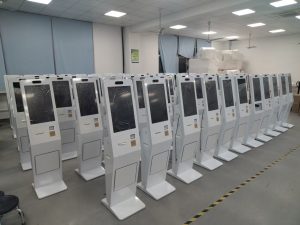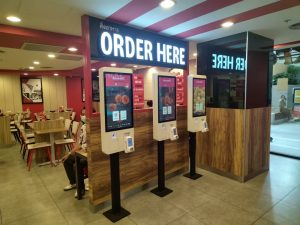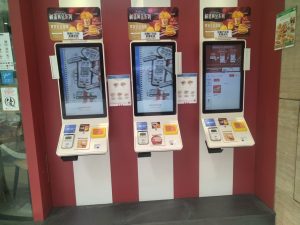
Human-machine interaction is moving routine transactions to self-service while keeping staff available for exceptions and support.
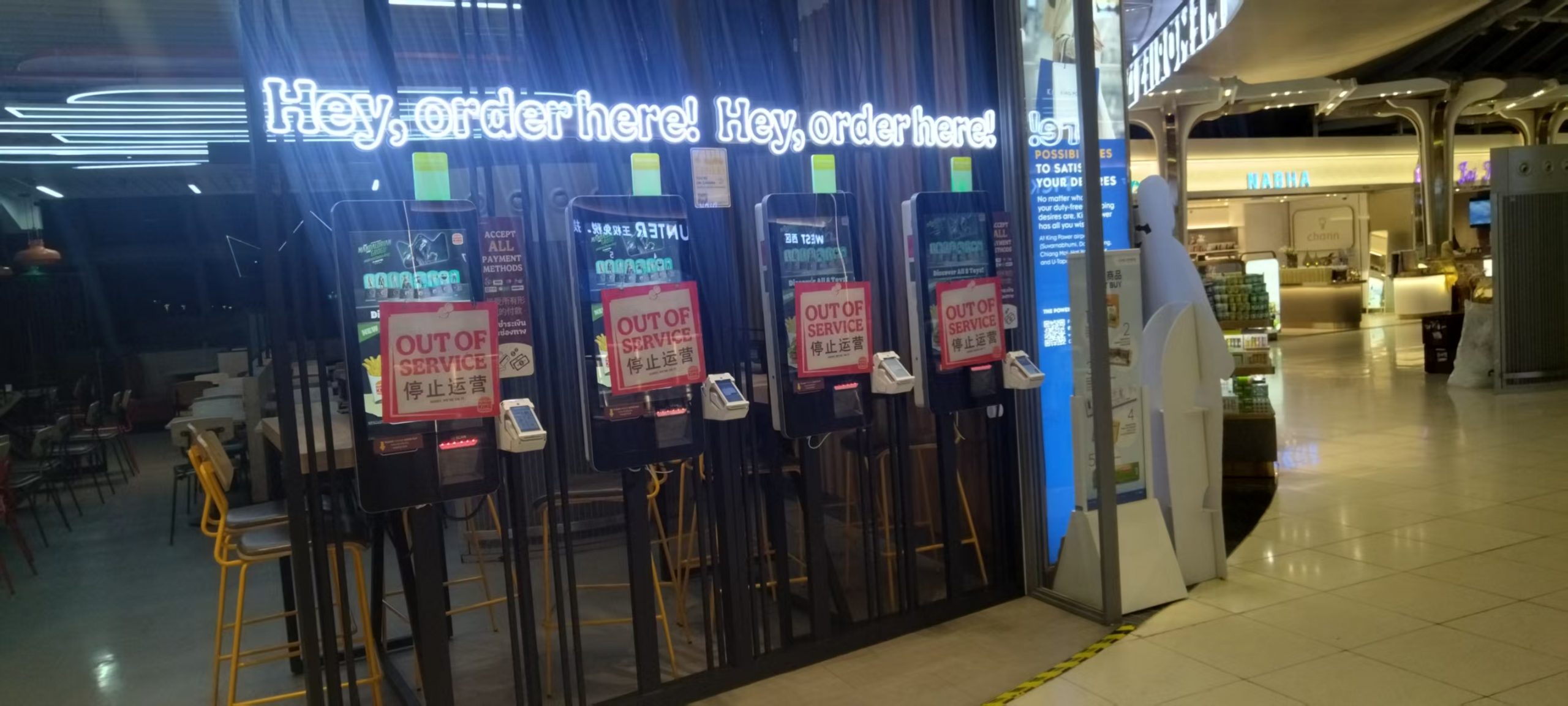
Unmanned Self-Service Restaurant Ordering Kiosks
With the continuous development of smart self-service machines, rapid technological innovation has accelerated integration with traditional industries, opening a new era of intelligent, connected digitalization. The combined application of new-generation technologies has become a driving force for creating social and production value, and self-ordering kiosks – focused on exploring business models for real application scenarios – are producing a wave of innovative products.
The core concept of smart restaurant new retail is to integrate smart terminals and intelligent management systems into overall operations. By combining a self-ordering system, facial-recognition settlement system, and intelligent ordering and charging system, the self-ordering kiosk delivers an unmanned, user self-service ordering experience and convenient dining, greatly reducing the overall operating costs of corporate cafeterias and opening new experiments and explorations in enterprise dining models for the post-pandemic era.
Smart Self-Service Machines Solving Unmanned Self-Service Dining Scenarios
To solve the dining difficulties of employees at small and medium enterprises during the outbreak period and to provide office workers with healthy, reassuring, and convenient work meals, Vinno Robotics, by combining the innovative products of two startups, Xidai and Kuhe, used intelligent unmanned retail cabinets and smart cooking machines to rapidly build a smart dining solution characterized by unmanned self-service. While meeting employees’ daily work-meal needs, it also provides supply-chain partner companies with accurate, dynamic user demand data, exploring new unmanned smart dining application scenarios.
The complete smart dining new retail solution is built on three links: a central kitchen, smart retail cabinets, and smart micro-kitchens. After safe processing in the central kitchen, food is delivered daily by cold chain to the smart retail cabinets. Users can open the cabinet door quickly and seamlessly via facial recognition to select their meals. Using more advanced Intel AI vision technology and gravity sensors, the smart cabinet determines which products the user has selected and automatically settles the price when the door closes. Users then place their selected dishes into the smart micro-kitchen themselves; based on the QR code on the dish packaging, the machine identifies the cooking time required and automatically stir-fries through 360°, delivering a wok-fresh, flavorful meal in 3 – 5 minutes.
The Smart Dining Solution
Traditionally, deep learning has been thought to require high-performance GPU, TPU, or FPGA hardware platforms and high-speed network bandwidth. But the founder of Xidai – a startup that has always focused on artificial intelligence – did not choose the conventional route. Instead, the Intel Movidius Neural Compute Stick was used inside the intelligent unmanned retail cabinet to accelerate the product’s image-recognition learning and inference capabilities. This approach made edge-computing deep learning feasible, enabling the smart unmanned retail cabinet to identify users’ purchases more accurately and quickly, while also lowering, to a degree, the barriers for enterprises to develop, tune, and deploy AI applications. The Intel Movidius Neural Compute Stick runs on an N4000 mainboard, and with Intel technology on board, it provides stable system support for the smart retail cabinet’s daily operation.
In terms of how deeply the restaurant industry has so far integrated with artificial intelligence, the industry as a whole is still at a fairly early stage. By early 2021, the disease outbreak had also brought enormous changes to the restaurant sector, further accelerating its intelligent transformation. Robots are being applied ever more widely in food retail. With AI-powered robotic terminals combined with cloud software – providing product recognition, smart settlement, automatic cooking, and other services – restaurants can be fully automated. This also brings many benefits to businesses and guests alike, improving the dining experience.
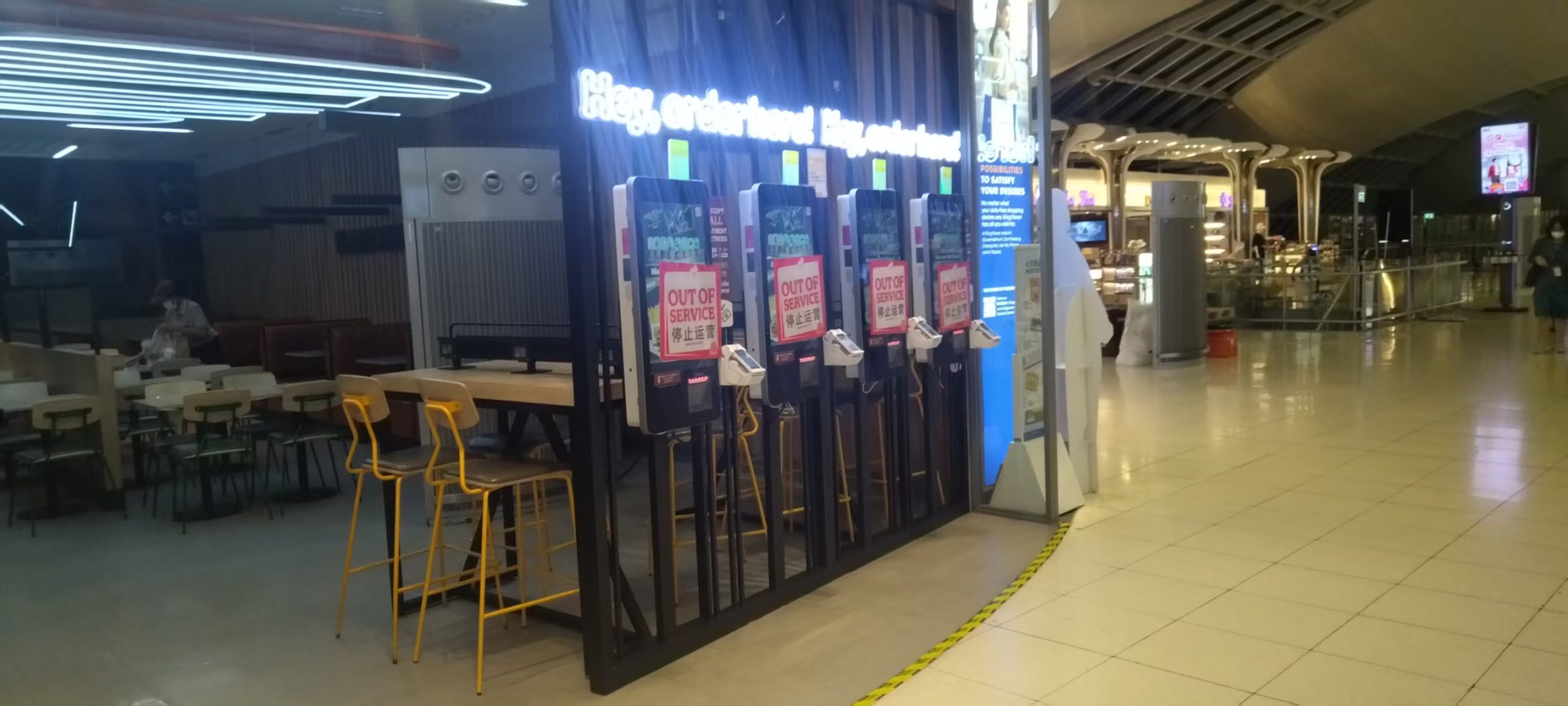
Practical Conclusion
Understand how an unattended retail kiosk combines touch interaction, payment, remote monitoring and guided workflows across modern service environments. The final configuration should be verified against the real menu, transaction flow, installation space and support plan before deployment.
Deployment and Operating Checks
Planning for unattended retail kiosk should begin with the actual service flow rather than a generic demonstration setup. Before launch, test the workflow associated with unattended retail kiosk during realistic peak demand and confirm how staff will assist users. Documentation for unattended retail kiosk should cover cleaning, updates, network recovery and peripheral checks. A deployment involving unattended retail kiosk should pass consistent information to payment and back-office systems.
Explore related hardware configurations in the self-service kiosk product range.