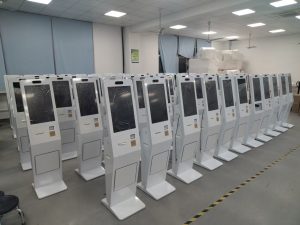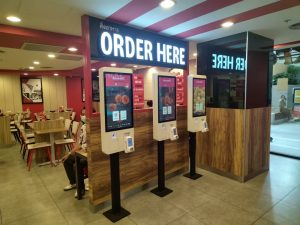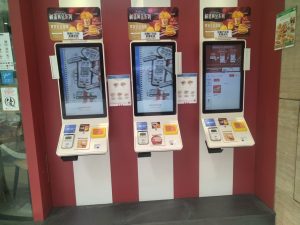
Late at night near a transport hub, scenic area or commercial street, the staffed counter may be closed while a self-service terminal outside continues to display the menu, accept payment and print an order ticket. The completed order can move directly to the kitchen or overnight service team. For restaurants that need longer service hours, lower indoor congestion or extra capacity during temporary peaks, outdoor ordering is becoming a practical service channel.
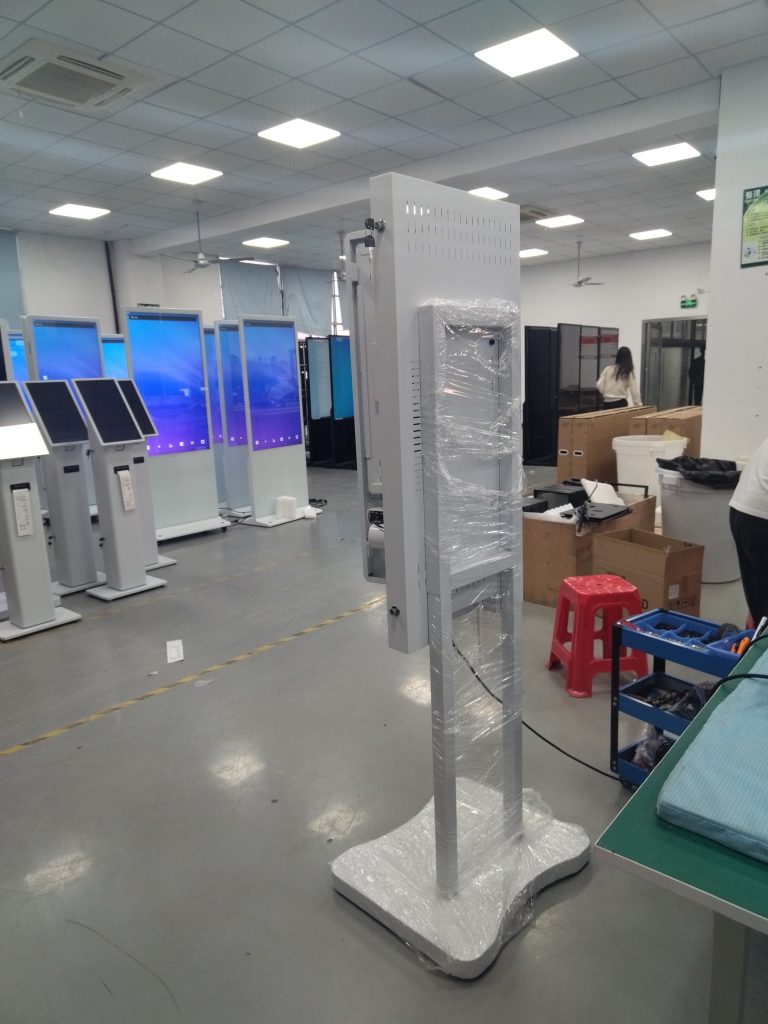
An outdoor ordering kiosk cannot be created by placing an indoor terminal inside a simple cover. Sunlight reduces screen readability, water and dust challenge every opening, summer heat and winter cold affect electronic components, and equipment in public areas faces impact and tampering. The display, enclosure, thermal system, touch interface and peripherals must be designed together for the intended environment.
Why indoor equipment struggles outside
Indoor kiosks are protected by a controlled building environment. Outdoors, direct sunlight can make a normal commercial screen appear washed out. A sudden rain shower tests door seals, cable entries and ventilation paths. Dust collects around filters and moving parts, while solar heat can raise the internal temperature well above the surrounding air. In cold weather, touch response and peripheral operation may also change.
Demand still exists because restaurants want to move part of the ordering queue away from the interior, offer an unattended channel after normal counter hours and serve concentrated traffic at parks, event sites and transport locations. An outdoor ordering kiosk addresses that need only when its environmental design matches the installation rather than relying on an indoor specification.
Display enclosure and impact protection
The 32-inch configuration described in the source uses an LED-backlit LCD panel rated at 2,500 cd/m² with a 178-degree viewing angle. The high-brightness panel is intended to keep menus and payment prompts readable in strong ambient light. Final visibility still depends on screen orientation, reflections and the path of the sun, so the installation position should be reviewed on site.
The enclosure is specified at IP65 and uses 1.5 mm galvanized steel with an outdoor powder coating. The front is protected by scratch-resistant, explosion-resistant glass rated at Mohs hardness 7, while the complete unit is specified at IK10 for impact resistance. IP65 means the enclosure is dust-tight and protected against low-pressure water jets under defined test conditions; it does not mean the kiosk can be submerged. Seals, locks, cable glands and installation quality remain part of the protection system.
Temperature control and touch response
The internal design combines a temperature-controlled fan with thermal insulation. The stated operating range is -20°C to 50°C, and the storage range is -30°C to 60°C. These figures define the intended limits for the specified configuration. Solar loading, blocked airflow and local climate can affect the internal temperature, so thermal performance should be assessed with the final hardware and installation.
The projected capacitive touch system supports ten touch points with a stated response time of no more than 10 ms. It is also designed for gloved operation, which can be useful for winter users and restaurant staff wearing food-service gloves. Because glove material and thickness vary, the outdoor ordering kiosk should be tested with the gloves expected at the site before deployment.
Completing payment printing and connectivity
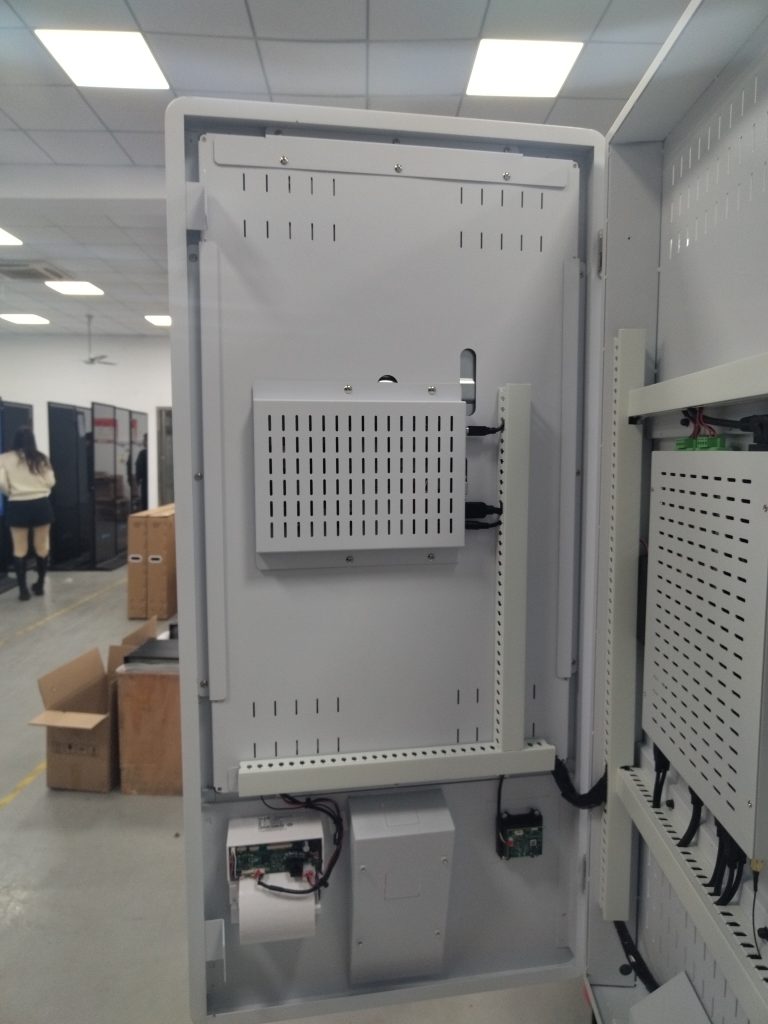
The payment workflow includes a QR code scanner with an LED fill light for low-light scanning. A standard mounting position is reserved for an external wired or wireless POS terminal, allowing card payment when it is connected to a compatible local service. The 80 mm thermal printer is specified at a print speed of at least 200 mm per second, an automatic cutter life of at least 1.5 million cycles and support for a paper roll up to 80 mm in diameter.
The computing configuration runs Windows 11 Pro on a 12th-generation Intel Core i5 processor with 8 GB of memory and a 256 GB solid-state drive. Network options include gigabit RJ45 Ethernet, Wi-Fi 6 and Bluetooth 5.2, with optional 4G or 5G modules. Mobile connectivity can support locations without a wired network, but signal strength, data service and remote-management security must be confirmed for the actual site.
Installation and front service access
The described outdoor ordering kiosk measures approximately 520 mm wide, 1,800 mm high and 350 mm deep, with a net weight of about 55 kg. It uses a reinforced square floor base with an anti-pry design and can also support wall mounting. The correct anchoring method depends on the floor or wall structure, wind exposure, pedestrian traffic and local installation requirements.
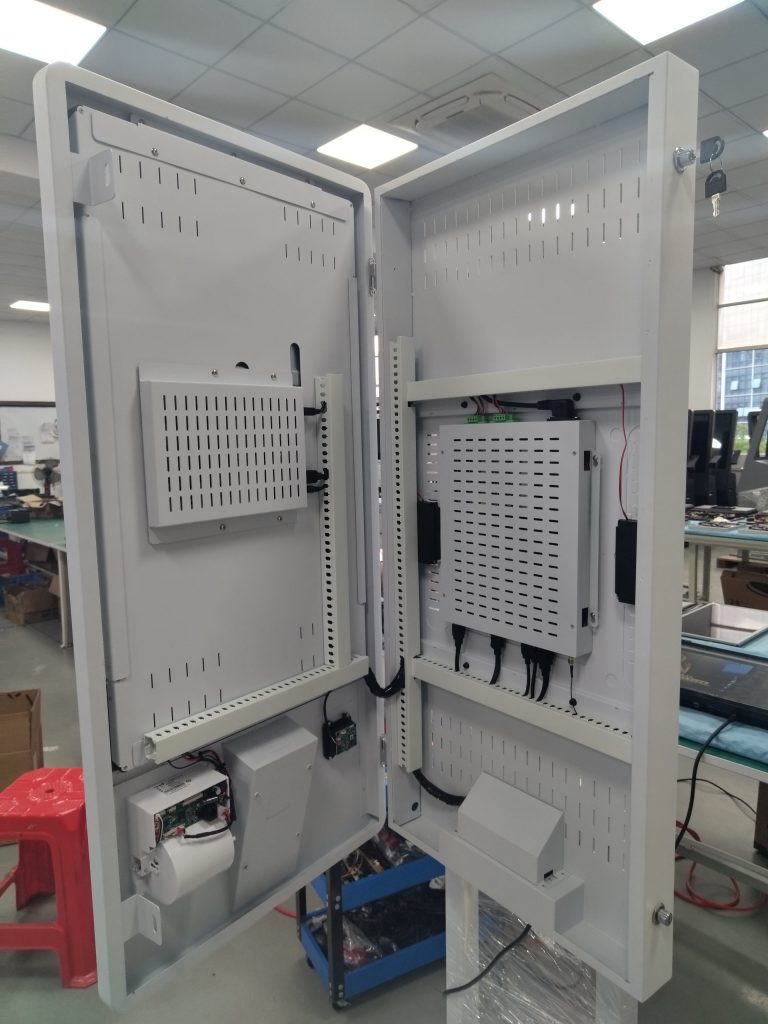
Front-opening service access allows staff or technicians to replace printer paper, clean the display area and reach modules from the front. This can reduce the need for a full rear service corridor. It does not eliminate planning: the door still needs clearance, drainage must direct water away from openings, and the power isolation point must remain accessible.
Treat the installation as a complete outdoor system
Before installation, confirm the foundation, drainage direction, shading, electrical protection, grounding, network coverage and maintenance space. A 2,500-nit display and an active thermal system have corresponding power and heat loads. The supply circuit, protective devices and ventilation path should therefore be sized for the final configuration rather than a generic indoor terminal.
An outdoor ordering kiosk can extend service hours, divert queues and add an ordering point for busy or temporary locations. Its long-term value depends on the complete system: readable display, sealed enclosure, thermal control, responsive touch, compatible payment, dependable networking and practical maintenance. When these elements are matched to the site, the device can operate as a stable extension of the restaurant rather than a fragile screen placed outside.
Explore related configurations in the self-service kiosk product range.