Working Principle and Application Scenarios of Embedded Displays
Embedded displays are used extensively both in the industrial Internet field and in city services—for example, the intelligent crosswalk capture system we discussed previously makes use of them. Industrial control touchscreens have excellent anti-interference characteristics and application stability, with broad application prospects in different application environments ranging from industrial production lines to daily life. They are currently a replacement for miniaturized computer applications, and we believe that in the near future touchscreens will certainly play an even more important role in the field of industrial control. This makes in-depth research on touchscreens and the promotion of their applications especially important.
Principle of Embedded Displays
A touchscreen system generally consists of two parts: the touchscreen controller and the touch detection device. The main function of the touchscreen controller (card) is to receive touch information from the touch point detection device, convert it into touch point coordinates, and send them to the CPU; it can also receive commands from the CPU and execute them. The touch detection device is generally installed on the front of the display, and its main function is to detect the user's touch position and transmit it to the touchscreen control card.
Introduction to Industrial Control Touchscreens
The embedded display is an intelligent interface that unites humans and machines through touch-enabled industrial monitors. It is an intelligent operation and display terminal that replaces traditional control buttons and indicator lights. It can be used to set parameters, display data, and monitor equipment status; it can depict the automation control process in the form of curves/animations—more convenient, faster, and more expressive—and can simplify the PLC's control program. The powerful touchscreen creates a friendly human-machine interface. As a special computer peripheral, the touchscreen is currently the simplest, most convenient, and most natural form of human-machine interaction. It endows multimedia with a brand-new look and is a highly attractive new multimedia interaction device. The embedded display has strong flexibility: functional modules can be replaced or added according to design requirements, giving it strong expandability to meet complex process control needs. It can even communicate directly with PLCs via network systems, greatly facilitating the processing and transmission of control data and reducing maintenance workload.
Practical Application of Touchscreen Technology
The touchscreen controls the technological process through contact with buttons, switches, or parameter settings on the panel by external objects. The operating content on the panel can be edited manually via programming software, and the completed process status can be displayed on the touchscreen. It is therefore both an input device and an output device, with flexible operation and powerful functionality. The PLC system can be connected to the touchscreen simply through the DP network, reducing external signal transmission lines and achieving organic integration of resources.
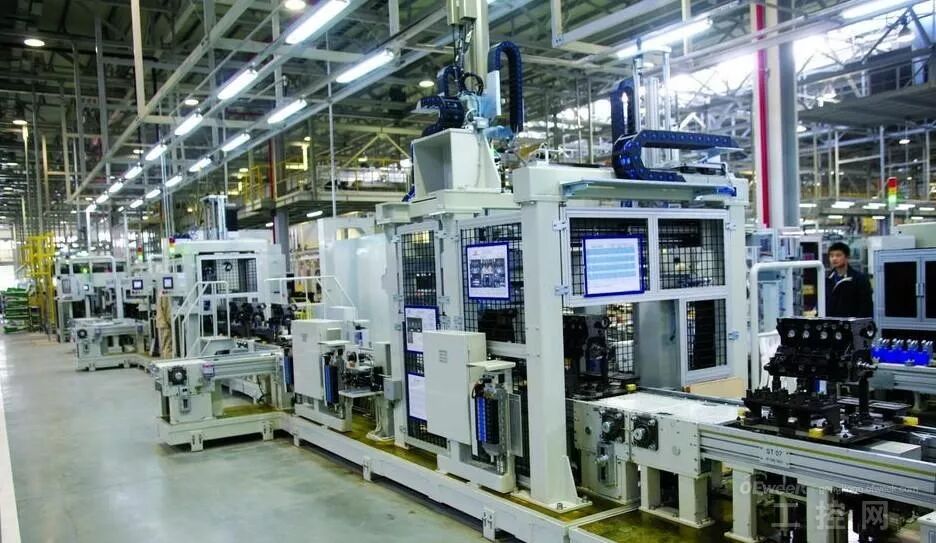
With the large-scale development of the automation industry, equipment in all industries has undergone comprehensive renovation, optimizing processes, reducing labor intensity, and beautifying the operating environment. In particular, the previous operating mode has been completely changed: new touchscreen systems have fully replaced old-style buttons and indicator lights, optimizing process flows and reducing the number of electrical devices, greatly reducing the equipment failure rate and ensuring stable production. Touchscreen systems are mainly applied on the operation boxes of various production lines; they are highly stable, faults are easy to locate, and no crashes or control failures have occurred. Operators' operations are also centralized and simple.
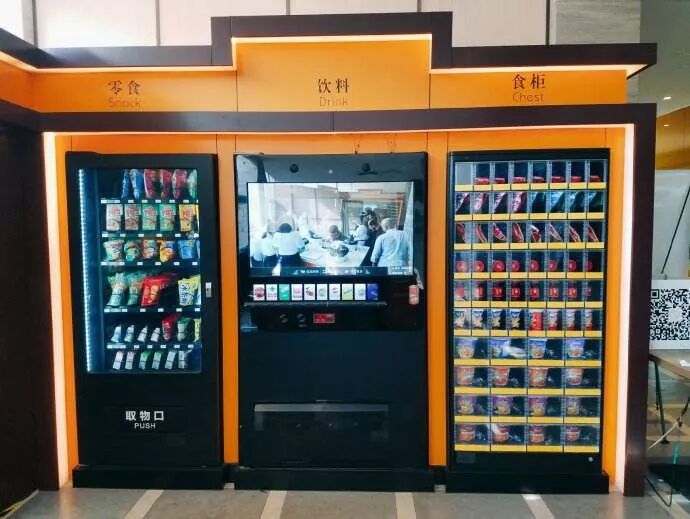
For project planning, a embedded industrial display should be evaluated together with the mounting structure, signal interfaces, touch method, operating environment, and maintenance requirements.
When specifying a embedded industrial display, integrators should match the display configuration to the actual installation space, control system, viewing conditions, and expected duty cycle.
ZXTLCD can configure a embedded industrial display around project-specific requirements such as panel size, brightness, touch technology, interfaces, mounting method, and environmental protection.