

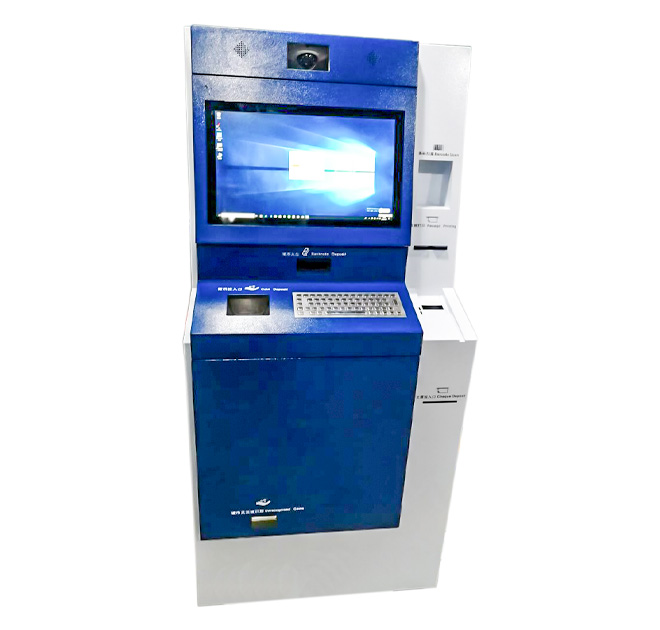
Hardware Built Around a Banking Workflow
A self service payment kiosk manufacturer supplies the physical platform that brings the screen, computer, readers, printers and transaction modules into one serviceable enclosure. The banking terminal has a large display, keyboard area and several front-facing device positions. It can be engineered for bank or financial-service projects after the required modules and security responsibilities are confirmed.
The product should not be presented as a certified deposit or withdrawal machine solely from its appearance. Cash handling, biometric verification, encrypted PIN entry, host communication and regulatory compliance depend on specialist components and solution providers. ZXTLCD can manufacture the enclosure and integrate approved hardware, while the customer controls the banking application and certification.
Define Each Transaction Before Mechanical Design
Deposits, withdrawals, transfers and account inquiries require different devices and service clearances. A cash acceptor or dispenser occupies more internal space than a card reader, while biometric modules require a suitable capture position and software interface. The buyer should supply model drawings for every critical device before front-panel openings and brackets are finalized.
An experienced self service payment kiosk manufacturer should also consider how authorized technicians reach cash storage, paper rolls and communication hardware. Service areas may need separate locks and controlled access. Cable routes, cooling, backup power and anchoring should be planned for the installation rather than added after the first sample is built.
Security Extends Beyond the Cabinet
Privacy shielding, reinforced doors, alarm contacts and camera positions can support the physical design, but they do not replace encrypted applications or certified financial modules. The bank or integrator remains responsible for identity rules, transaction logs, cybersecurity and user-data handling. The screen should clear sensitive information after timeout and provide a safe recovery path following a network or power interruption.
Accessibility also affects layout. Keypads, card slots, cash positions and receipt output need to remain within an appropriate reach range. Queuing lines and nearby cameras should not expose customer input. A prototype review can test these relationships before repeat production.
Procurement and Acceptance
Buyers comparing a self service payment kiosk manufacturer should examine engineering support, component compatibility, maintenance access and configuration control rather than enclosure appearance alone. Acceptance testing should use real modules and simulate rejected cash, unreadable cards, printer errors and communication loss.
Production documentation should record every approved component and regional variation. A visually similar keypad, reader or cash module may require different mounting, communication and certification, so substitutions need formal review. The first unit should be tested with final software and host connections before quantity production. Spare-parts planning should distinguish ordinary computer and display components from certified financial devices maintained by specialist partners.
Provide the transaction list, module models, software platform, security standard, screen size, installation conditions, certification ownership and order quantity. ZXTLCD can prepare a project-specific enclosure proposal without overstating functions that belong to third-party banking systems. Every delivered unit should carry a traceable configuration record for future maintenance and controlled replacement.
Control Changes Across the Banking Fleet
Once the first unit is approved, every later change to a reader, keypad, printer or internal computer should be documented. Even components with similar external dimensions may use different communication protocols, power requirements or security approvals. The bank and integrator should maintain a configuration list for each location and identify which organization can authorize substitutions. Field technicians also need service instructions that separate ordinary maintenance from restricted access to cash and security modules. A controlled spare-parts plan, serial-number record and acceptance checklist make it easier to investigate failures without weakening the certified transaction environment.
The final service manual should identify approved access levels, inspection intervals and the contact responsible for certified financial components.