

Bring Card Production Closer to the User
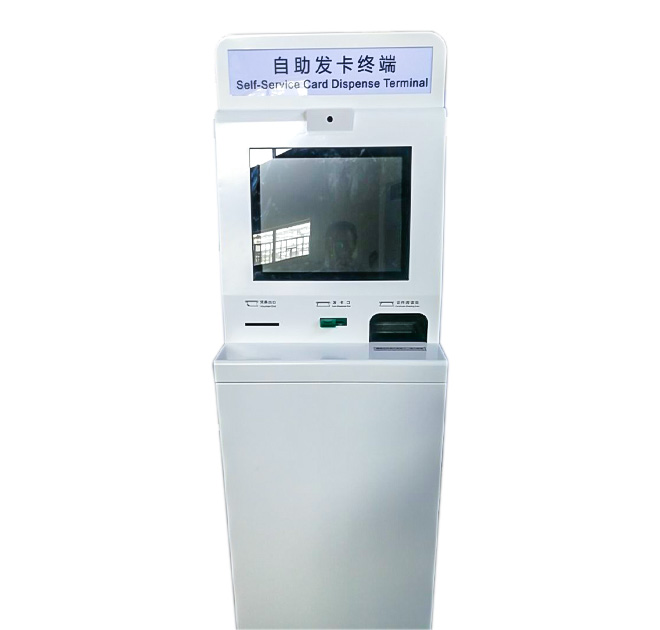
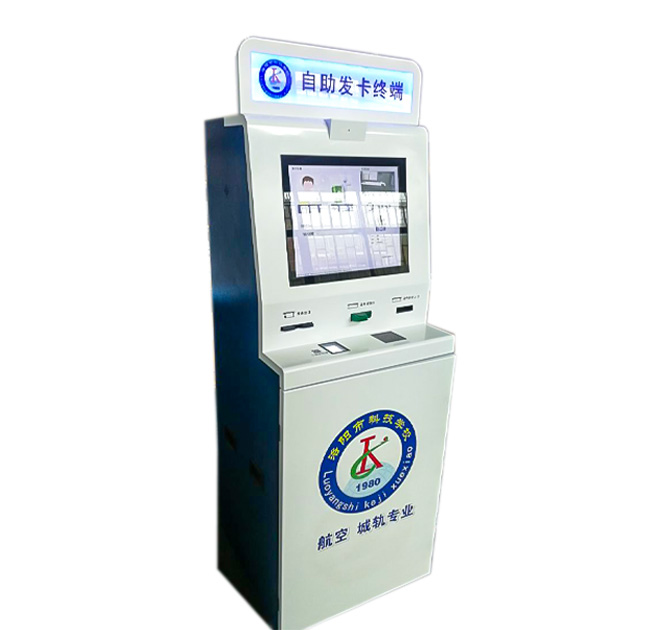
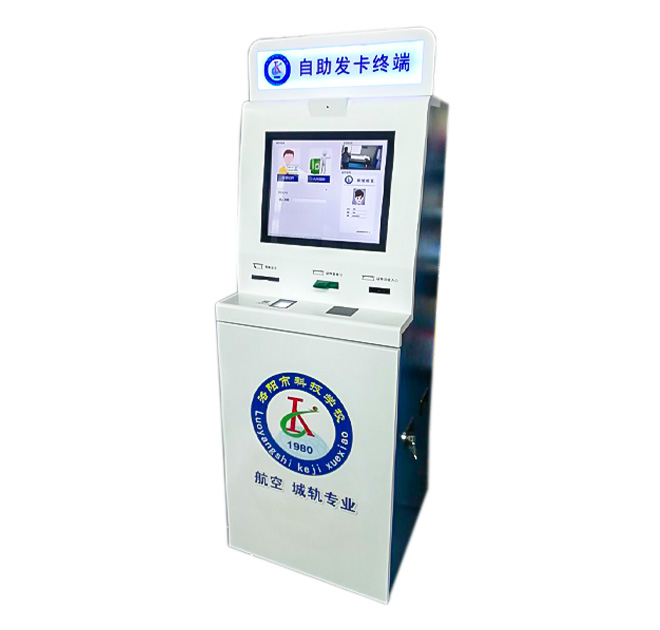
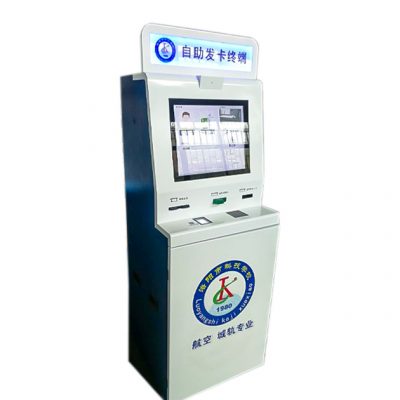
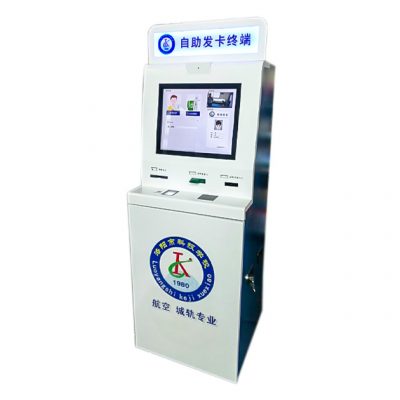
A self-service kiosk machine for card issuance can combine user identification, data entry, payment and card collection in one guided process. The enclosure includes a large display and several front-facing device positions, providing a platform for a card dispenser or printer, document reader, keypad and payment hardware. The actual component set should be selected for the card type and software used by the project.
This equipment can support telecom service cards, bank-related cards, campus cards, membership cards, access credentials or other operator-defined media. Instant production is only possible when the appropriate card printer, encoder, consumables and issuing software are included. Security policies and identity verification remain the responsibility of the complete solution provider.
Turn a Complex Process into Clear Steps
Users may begin by selecting a service and confirming eligibility. The interface can then request identification, capture required information, present fees and ask for approval before production. A self-service kiosk machine should show progress clearly during printing or encoding so the user does not leave before the card is ready.
If a transaction cannot be completed, the system should provide a specific instruction, such as retrying a scan or visiting an assisted desk. This reduces abandoned sessions and prevents users from repeatedly entering sensitive information. Multilingual screens can be added for locations serving international customers.
Module Layout Depends on the Card Workflow
Possible hardware includes an ID or passport reader, camera, signature pad, card printer, card dispenser, receipt printer, encrypted keypad, bank card reader and contactless module. Each option affects internal space and front-panel design. Confirmed device drawings and service clearances are required before the enclosure is manufactured.
The cabinet should allow authorized operators to replenish blank cards, replace printer supplies and clear rejected media. Locks, access logs and physical separation of sensitive modules may be required by the customer security standard. Card hoppers, rejected-card storage, print ribbons and cleaning cycles influence how often staff must open the machine. Testing with final card stock confirms print quality, encoding reliability and output alignment.
Deployment and Procurement
A self-service kiosk machine of this type can be installed in service halls, branches, campuses, transport locations and controlled public environments. It is useful when card issuance volume is high or when service availability must extend beyond staffed counter hours.
Provide the card dimensions and material, print or encoding requirement, identification method, payment process, selected module models, software operating system and estimated daily volume. ZXTLCD can develop a hardware layout that matches the real issuing workflow. Spare modules and a documented recovery procedure are especially important where the terminal is expected to issue cards outside staffed hours.
Control Card Stock and Personal Data
Card issuance projects combine physical inventory with sensitive user information. The operator should define who can load blank cards, open rejected-card storage and access production logs. The cabinet can support locks and separated service areas, but permissions, audit records and data retention come from the full system. When photographs or identity documents are captured, the interface should explain why the information is required and remove it from the public screen after completion.
A prototype should be tested with every planned card material and thickness. Printing, embossing, lamination or contactless encoding can each change the module arrangement and production time. Operators should measure hopper capacity, rejected-card rate and consumable replacement intervals using expected daily volume. Before shipment, the acceptance test can include identity reading, data confirmation, payment where applicable, card personalization, collection and secure recovery after an interrupted session.
For multi-site programs, standardized card modules and consumables simplify technician training and spare-parts planning. Regional variations should be documented as controlled configurations rather than informal changes made during installation.