

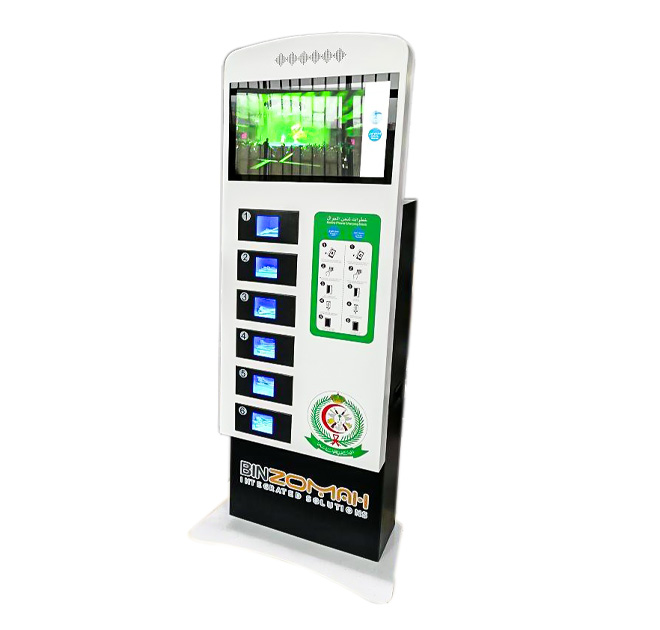
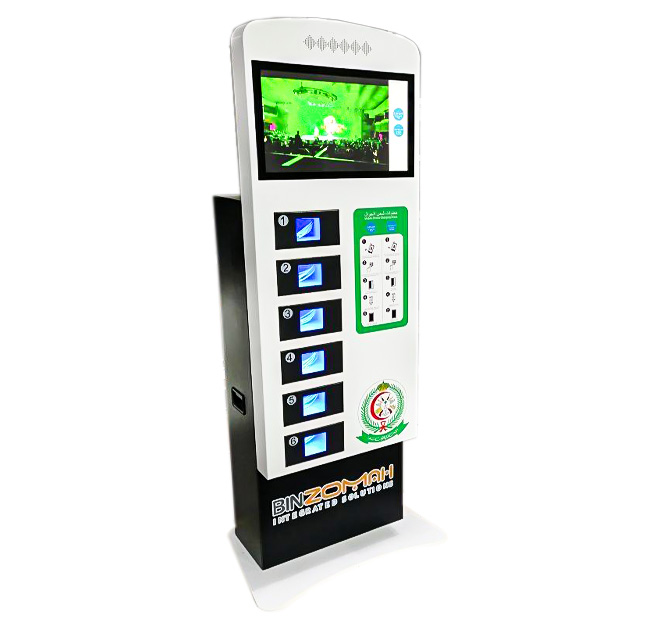
Add a Practical Charging Service Where People Wait
Smartphone battery anxiety is common in shopping centers, hotels, restaurants, hospitals, airports and event venues. Charging-oriented self service devices can provide a visible, structured way for visitors to access a power bank or mobile charging service without relying on a staffed counter. The station is suited to locations where people spend time, move between zones or depend on their phones for tickets, maps, payments and communication.
This product concept should be planned as part of a complete service rather than as an isolated cabinet. The buyer needs to define how users begin a rental, how a power bank is released, where it can be returned and what happens when assistance is required. Those workflow decisions determine the software, payment and connectivity requirements and should be confirmed before production.
Match Capacity and Placement to Venue Traffic
Site planning begins with expected demand. A compact deployment may serve a reception or restaurant waiting area, while a transport hub or event venue may require greater capacity or several stations. Buyers should consider peak visitor volume, average dwell time, operating hours and whether returns are allowed at the same station or across a network of locations.
Visibility matters. The station should be easy to locate without blocking circulation, emergency routes or accessible paths. Power and network access must be available at the planned position. Clear on-screen instructions and physical labels can explain rental, return and support steps. When self service devices are deployed across multiple sites, consistent branding and interface language help customers recognize the service quickly.
Plan the Rental and Support Experience
A smooth journey limits uncertainty at every stage. The interface can present the available service, guide the user through the approved authorization process and confirm whether a power bank has been released. Return instructions should be equally clear. The operator should define policies for unavailable units, incomplete returns, failed authorization and customer support.
Payment capabilities are configuration-dependent and must be matched to the operator’s chosen platform and regional requirements. The same applies to QR-based access, membership systems or third-party rental software. ZXT LCD can review the enclosure and integration needs, while the buyer or solution provider confirms the commercial platform, data handling and transaction rules.
Make Maintenance Part of the Specification
Public charging services require regular inspection. Operators should establish routines for cleaning, checking slots, identifying damaged power banks and verifying network status. Remote visibility may help a service team prioritize replenishment or maintenance, but the required monitoring functions need to be defined in the project scope. Spare components and field-service responsibilities should also be agreed for larger rollouts.
The station’s external finish can be aligned with a venue or rental brand. Graphic areas, color, logo placement and user instructions should be approved before manufacturing. Packaging and delivery planning become important when units are distributed to many branches, particularly when installation teams need repeatable documentation.
Build a Commercially Viable Deployment
Procurement teams can compare a pilot location against expected utilization, support cost and expansion potential. A limited trial helps validate the user journey, station placement and operational process before committing to a wider network. Distributors can also define localized documentation, service coverage and volume forecasts in advance.
The pilot should include more than a launch-day demonstration. Operators can observe demand over normal weekdays and peak periods, record failed or abandoned sessions and check whether return instructions are understood. These findings create a practical basis for deciding station quantity, service staffing and replenishment frequency at the next group of sites.
Send the target venue, expected traffic, preferred rental workflow, branding requirements and rollout quantity for review. The team can propose a suitable configuration for charging-focused self service devices and prepare a quotation based on confirmed capacity, integration and customization needs.